Ever wondered which auto mechanic jobs pay the most? Is it expertise or simply demand for certain skills? And most importantly, how can you capitalize on these opportunities?
Well, you’re not alone in thinking like that.
Auto repair shop owners want to grow their business with specialized talent. Mechanics are eyeing the most profitable roles. Everyone wants to know where the big bucks are.
Understanding the highest-paying auto mechanic jobs isn’t just interesting. It could transform your career, or if you are an auto repair shop owner, you could hire the best mechanics for your auto repair shop.
So, stick around to discover the answers.
Top 7 Highest Paying Auto Mechanic Jobs in 2025
According to Salary Solver, an entry-level mechanic can earn around $36,000–$42,000/year. However, actual earnings can vary depending on multiple factors like location, experience level, and certification, etc.
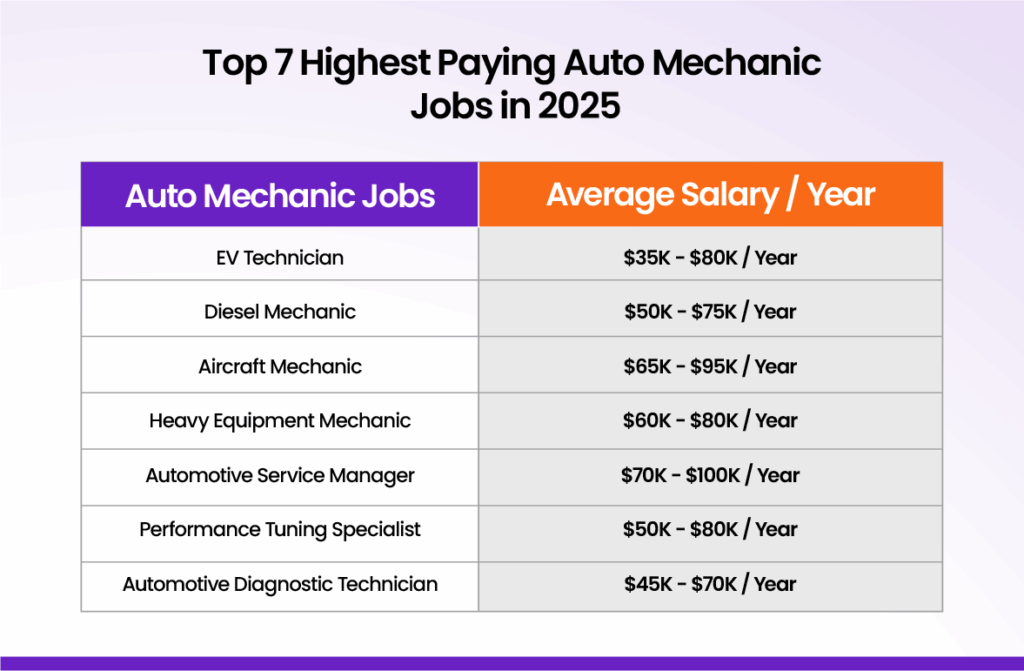
Interesting, isn’t it? You’re probably eager now to know which roles pay the most. Here’s a breakdown of mechanic employment opportunities you can look out for:
1. Electric Vehicle (EV) Technician
EVs are booming, and they’re not going away anytime soon. Being an EV technician is like stepping into the future of automotive repair. These specialists handle high-voltage systems, electric drivetrains, and batteries.
Why It Pays Well
The EV revolution has created a serious shortage of qualified professionals. The mix of skills needed is in high demand.
Average Salary: $35,000 – $80,000/year
2. Diesel Mechanic
Diesel mechanics are the backbone of industries like transport and logistics. They repair and maintain trucks, buses, and heavy-duty equipment, ensuring everything runs smoothly.
Why It Pays Well
Large vehicles need detailed repairs. It is critical for daily operations in many industries.
Average Salary: $50,000 – $75,000/year
3. Aircraft Mechanic
When it comes to safety, aircraft mechanics carry huge responsibilities. They ensure everything from commercial planes to private jets is airworthy.
Why It Pays Well
Federal regulations and high stakes make this a challenging yet rewarding role. Training and certifications, like an A&P license, add to the rarity factor.
Average Salary: $65,000 – $95,000/year
4. Heavy Equipment Mechanic
Think of bulldozers, cranes, and agricultural machines. Heavy equipment mechanics repair these giant machines, often on gritty construction sites or in remote locations.
Why It Pays Well
Handling enormous machinery requires durability, precision, and advanced skills. Moreover, it’s a physically demanding job.
Average Salary: $60,000 – $80,000/year
5. Automotive Service Manager
Strong leadership and administrative skills are invaluable, especially in high-pressure environments like busy dealerships. Effective management directly impacts profitability here.
Why It Pays Well
Service managers are responsible for ensuring smooth shop operations. They have to meet revenue goals, manage technician teams, and handle customer satisfaction. Their ability to boost shop efficiency and maximize service profits makes them one of the highest-paid non-technical roles in the industry.
Average Salary: $70,000 – $100,000/year
6. Performance Tuning Specialist
How do you transform an ordinary car into a high-speed legend? Enter performance tuning specialists. They optimize engines, tweak aerodynamics, and modify vehicles for peak performance.
Why It Pays Well
The rarity of motorsport-specific skills boosts the earning potential significantly.
Average Salary: $50,000 – $80,000/year
7. Automotive Diagnostic Technician
The era of tinkering with engines by hand is over. Today’s mechanics use the latest diagnostic systems to pinpoint issues in modern vehicles.
Why It Pays Well
As vehicles become more complex, advanced diagnostic expertise is in high demand.
Average Salary: $45,000 – $70,000/year
This closely aligns with the average auto technician salary. For a deeper look at what auto repair technicians earn across experience levels and regions, check out our full guide on technician salaries.
Why Do Some Mechanic Jobs Pay More?
Becoming a mechanic means you have the chance to get highly paid. But it depends on the role and demand for specialized skills. Sometimes, these roles are tied to sectors with growing demand. To get started on this career path, check out how to become a mechanic.
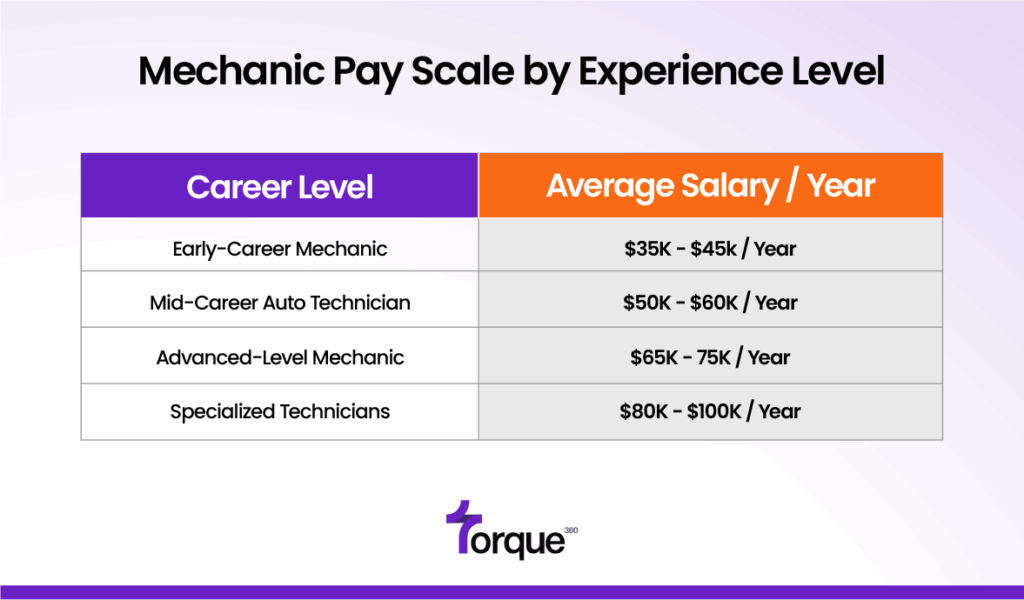
Below are some important factors influencing earning potential in 2025.
1. The EV Boom
Electric and hybrid vehicles are transforming how people drive and how mechanics work. Roles involving EV systems, like high-voltage wiring, battery packs, and smart diagnostics, require advanced training. It makes technicians highly sought after. As a result, EV-related roles are quickly becoming some of the best-paying jobs for mechanics.
2. Technology and Diagnostics
Modern vehicles are more like computers on wheels. Mechanics who master diagnostic tools and software are seeing rising salaries. These skills are now essential. The growing reliance on tech in repair work is pushing wages upward across the board.
3. Heavy Machinery Demand
Industries like construction, logistics, and agriculture depend heavily on large machinery. Technicians who specialize in repairing bulldozers and heavy equipment are in high demand. Their expertise commands a premium.
4. Location Matters
The average wage for an automotive technician can also vary significantly based on where you work. Areas with a shortage of qualified technicians often offer higher pay to attract and retain talent. This is especially true in rural parts of states like Montana, West Virginia, and New Mexico.
Challenges Mechanics Face (and How to Solve Them)
Every mechanic faces challenges throughout their career journey. Knowing how to overcome them can help you advance in the best-paying jobs in the automotive industry.
1. Feeling Stuck in Low-Paying Positions
Many mechanics start in roles that offer little financial growth. It makes it hard to stay motivated or plan long-term. This often results from a lack of specialization or outdated skill sets.
Solution
Upskilling with certifications like ASE Master Technician or EV specialization enhances your expertise. It also qualifies you for high-demand roles in emerging fields like electric vehicles. If you’re considering ASE certification, this guide on becoming an ASE-certified mechanic can help with your career.
2. High Cost of Training
Pursuing certifications or vocational education can be expensive, especially without financial support. Many aspiring mechanics delay or forgo training because of the upfront cost.
Solution
Research employers offering subsidized training or certification programs. To explore affordable certification options and schools, this list of top automotive mechanic certifications and trade schools can help. It provides a helpful comparison of paths that fit your budget.
3. Difficulty Standing Out
With so many professionals in the field, it’s easy to get overlooked. This is especially true if you don’t have a unique selling point. Standing out requires more than just doing the basics well.
Solution
Focus on earning excellent customer reviews. Develop specialized skills such as diesel or EV expertise. These niche areas are in high demand. And these can open doors to higher-paying opportunities and career advancement.
4. Stressful Workdays
Long hours, physical strain, and constant deadlines can make the job mentally and physically exhausting. Without proper systems in place, burnout becomes a real risk.
Solution
Developing strong time management skills can help reduce stress and improve productivity. Additionally, consider transitioning into roles like service advising. This involves less physical strain while still keeping you involved in the automotive industry.
5. Lack of Growth Opportunities
Some shops offer limited room for advancement. Usually, if they haven’t adopted modern tools or practices. This can make talented mechanics feel stuck.
Solution
Auto repair shops using advanced digital tools are likely to see efficiency and streamlined operations. by using. “Auto repair software is transforming automotive education” by enabling new generation technicians and mechanics to become more skillful.
Preparing for the Future
Exploring the highest-paying auto mechanic jobs can open new opportunities. This can help mechanics and shop owners increase their earnings.
Whether it’s upskilling for EV services or hiring specialists for your shop, recognizing these in-demand roles is key. Doing so can give you a competitive edge in 2025.
Here are answers to common questions about the automotive mechanic career. They cover salaries, job roles, and career prospects.
1. What is the average salary for a car mechanic in the US?
Car mechanics earn anywhere between $35,000 and $60,000 annually. It depends on experience and location.
2. How much does an automotive technician earn hourly?
The automotive technician’s salary typically ranges from $20 to $35 per hour. It depends on certifications and hands-on experience.
3. Are heavy equipment mechanic jobs worth pursuing?
Absolutely! With salaries averaging $80,000, these roles are challenging but also highly rewarding.
4. Can electricians become EV technicians?
Definitely. Electricians often have foundational knowledge that transfers well into EV maintenance and diagnostics.
5. Why are diesel mechanics in such high demand?
Diesel-powered equipment is vital to industries like transport and construction. This means skilled diesel mechanics remain essential year-round. They are among the most reliable automotive mechanic jobs for long-term career growth.
6. What is the average pay for motorcycle mechanic roles?
Their average pay typically falls between $30,000 and $50,000 annually. It depends on experience and specialization.