Even a trusted auto repair shop can face risks from internal mistakes, supplier errors, or fraudulent claims. These issues can result in lost revenue, damage your reputation, and weaken customer trust.
However, a customer faces the brunt of the auto repair shop scams more than anyone. Unless you are a self-aware auto mechanic or a car expert, you are not aware of the inner workings of the car.
But how would one know if, as an auto repair shop owner, you are being scammed?
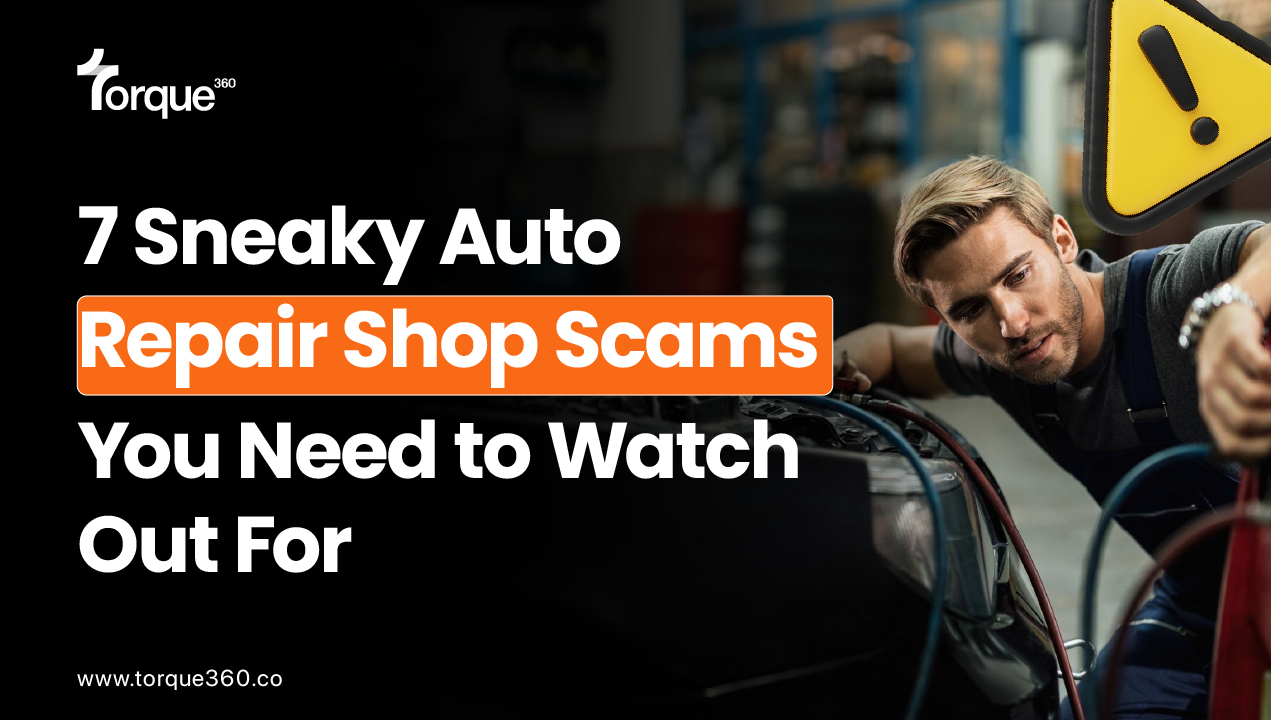
In this guide, you’ll learn about the most common auto shop scams affecting repair shops. Also, the warning signs to watch for and the actionable steps to protect your business. By the end, you’ll know how to safeguard your shop, maintain transparency, and build customer confidence.
What Are Auto Repair Shop Scams?
Automotive shop scams involve fraudulent or misleading practices that can occur within your shop. These frauds or scams can come from staff, suppliers, or external partners and put your business at risk.
These scams may include:
- Overbilling
- False warranty claims
- Misreporting labor hours
- Receiving counterfeit parts from suppliers
Even small mistakes or overlooked processes can make your auto repair shop vulnerable to fraud. From auto mechanic fraud to supplier errors, these issues can lead to angry customers or legal consequences. Recognizing these risks early is essential to protect both your shop and convert unhappy customers into happy ones.
7 Common Types of Auto Repair Scams
Understanding how scams can affect your shop helps you prevent revenue loss. Since auto shops are working with invoices, car parts, and tons of paperwork, it’s easier to overlook lots of red flags. Here are the top auto repair shop scams to avoid because these can impact your business:
1. Mechanic fraud
Staff or contractors may claim unnecessary repairs or misreport work done, leading to inflated bills and customer distrust. This can happen in the case when the shop owner is not available. For example, a mechanic says he will take a look at your car at your place, but doesn’t do a good job of it, and later on, you come back asking for a refund or make a complaint.
However, the shop owner remains confused as the job was not logged in. The problem was that the job was never logged into the system, and without proper records to verify, the chances of a mechanic scam can increase.
2. Overcharging for repairs
Billing errors, miscalculated labor, or inflated parts prices can occur internally or through suppliers, risking disputes and reputational damage. Customers sometimes mistake these issues for auto shop scams. For example, a customer comes in for brake replacements, and the shop adds an extra diagnostic fee that wasn’t mentioned earlier.
3. Unnecessary services
Offering or performing services not required can upset customers and create liability issues, even if unintentional. For instance, a customer came in for an oil change, but the mechanic performed additional repairs without clear documentation or customer approval, deeming it necessary, but it doesn’t provide clarity on this.
4. Unapproved parts usage
Using cheaper, low-quality, or counterfeit parts without the customer’s knowledge can compromise repair quality and legal compliance. This happens when cheap aftermarket parts are installed and the customer is charged for the OEM pricing.
5. Labor and parts inflation
Some shops exaggerate labor hours or inflate the cost of parts. If a 2-hour jobs is billed as 5 hours of labor, and beyond the fair market value will leave the customer baffled. These practices reduce profits, create disputes, and damage customer confidence, often being perceived as mechanic scams.
6. Fake promotions
Shops may advertise discounts or special offers, but add hidden fees or exclude conditions. For example, if a shop is advertising a $4.99 tune-up for the weekend only offers this when a customer buys some other additional services, it is actually misleading the promotion. This frustrates customers and harms long-term trust.
7. Unnecessary maintenance recommendations
Suggesting early or frequent maintenance beyond manufacturer guidelines may be perceived as dishonest and damage your shop’s reputation. Such as a simple job converted into multiple jobs that don’t need to be performed unless the car mileage reaches 30,000 miles or so.
7 Red Flags of Scams
Spotting warning signs early helps protect your shop’s reputation. There are always telltale signs of a mechanic or auto repair fraud. As a shop owner or a customer, you can always fish out the skeptical ones. Watch out for these common red flags:
1. Lack of auto repair shop reviews
A few negative reviews online can signal trust issues or past complaints. Monitor your shop’s reviews closely to identify potential problems. But that’s not just it. The way they respond to those negative reviews and the steps they take to resolve the complaint say a lot about the shop.
2. Pushy sales tactics
Staff pressuring customers into unnecessary repairs or upgrades can create internal risk. Such practices may damage your reputation and are sometimes compared to automotive repair scams.
3. Vague explanations
If mechanics cannot clearly explain work done or needed, it may indicate mistakes that auto repair estimate software can easily fix otherwise. So, instead of miscommunication, if you use software for auto repair estimates, you will have a clean bill in the end that explains the costs you are due.
4. Unfamiliar terminology
Overcomplicated technical language can confuse both staff and customers, making it easier for errors or fraudulent claims to occur. Not every person understands technical terms. A good mechanic would use layman’s language, making sure the customer understands the issue.
5. Inconsistent or confusing estimates
Estimates that frequently change or are unclear can indicate billing issues or potential staff misreporting. Some customers may even link this to an auto mechanic scam experience.
6. Unclear invoices or hidden charges
Invoices that are hard to read or filled with unclear terms can hide extra charges and harm transparency. Handwritten invoices can have this effect on the customer.
3 Specific Car Repair Scams
Some scams specifically target auto repair shops, putting both revenue and customer trust at risk. Recognizing these helps you prevent losses and maintain a strong reputation.
1. Alternator scams
Staff or suppliers may falsely report alternator failures, leading to unnecessary replacements. This can inflate costs and upset customers if discovered.
2. Car repair insurance scams
Incorrect or exaggerated insurance claims, whether by staff or external partners, can create financial risks. They may also expose your shop to serious legal issues. Accurate documentation and verification are essential.
3. Auto repair network scam
Joining repair networks that encourage upselling or unnecessary services can harm your reputation. Always verify the credibility of networks before participation to protect your business and customers.
Real-Life Car Service Scams
Seeing real examples highlights the impact scams can have on your business.
The Sears Auto Repair Scandal
Back in the 1990s, Sears faced a major scandal when regulators discovered some of its auto repair shops were charging customers for services like tire balancing and alignments that were never actually performed. The case became national news and severely damaged customer trust.
Local and state examples
State Attorneys General have fined shops for fraudulent claims, overbilling, or performing services for failing to properly document services. For example, in California, a repair chain faced penalties for misreported repairs, emphasizing the importance of accurate record-keeping.
Consumer protection references
Resources like the Better Business Bureau and Federal Trade Commission guide avoiding fraud, tracking complaints, and maintaining transparency. Using these resources proactively helps protect your shop and build customer trust.
How to Protect Yourself From Auto Repair Shop Scams
Preventing scams starts with clearly designed processes, staff training, and the use of the right technology, like auto repair software, to maintain transparency. Follow these steps to safeguard your shop and protect your customers.
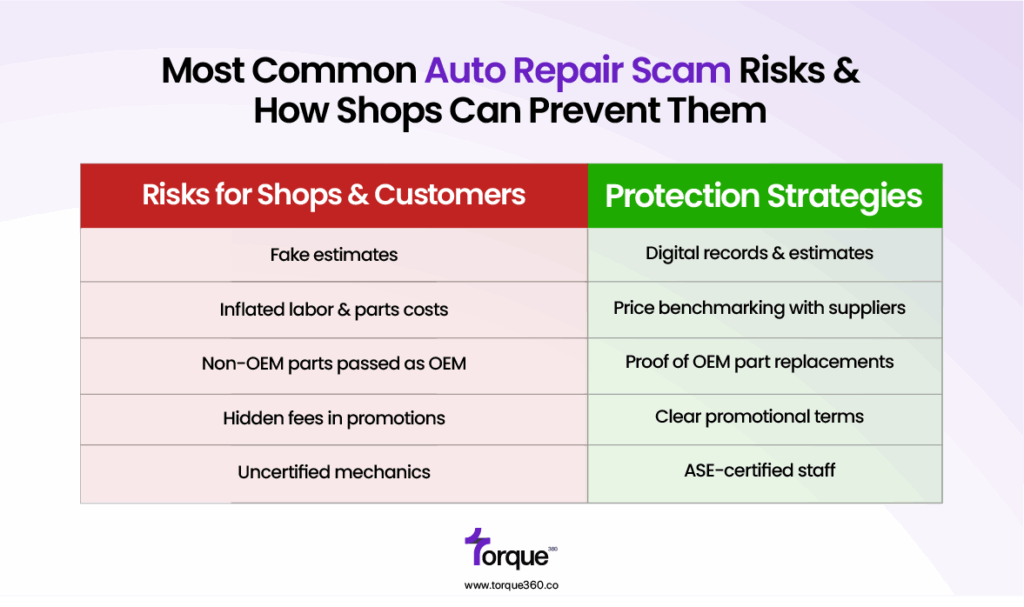
Research and read auto repair shop reviews
Monitor reviews for your own shop and your competitors. Reviews reveal not only customer satisfaction but also red flags. For example, if multiple customers complain about being billed for parts they never saw, that’s a sign of a potential common mechanic scam. By staying alert, you can fix problems early and prevent your shop from developing a bad reputation.
Get written estimates before agreeing
Always provide and document repair estimates clearly. Written approvals give both sides accountability. For instance, if a customer later disputes why a brake pad replacement cost $400, you can refer to the signed estimate. This reduces the risk of “he said, she said” disputes and stops accidental or intentional overcharging.
Compare with second opinions
When a diagnosis or supplier price feels questionable, get it double-checked internally or from a trusted partner. For example, if a supplier claims a transmission part jumped in price by 40% overnight, another vendor’s quote can help confirm if it’s genuine or an attempt to inflate costs. This habit protects customers from auto mechanic repair fraud. Also, it shields your shop from supplier fraud.
Ask for OEM recommendations and proof of part replacements
Make it standard to verify that parts are OEM or meet quality standards, and keep records of all replacements. Imagine a scenario where a mechanic installs a cheap knock-off alternator but charges for an OEM one. Without documentation, the customer suffers when the part fails early. Proper tracking builds trust and protects your shop from liability.
Check certifications
Ensure your team is ASE-certified or holds recognized credentials. Certified mechanics are trained to follow industry best practices and are less likely to take shortcuts. For example, an uncertified hire might incorrectly install brake rotors, leading to costly damage and safety issues. Certification reduces mistakes and keeps your shop compliant.
What to Do If You Get Scammed
Even well-run shops can encounter fraud, supplier errors, or internal mistakes. Acting quickly helps protect your business and recover losses.
Step 1: Document everything
Keep all receipts, invoices, emails, and photos of parts, labor, and communications. Accurate records strengthen your case and help identify the source of the issue. This is especially important in cases of mobile mechanic scams.
Step 2: Report to local and state agencies
If fraud involves suppliers, insurance claims, or external partners, report to the FTC, BBB, or your state Attorney General. These agencies track complaints and can provide guidance.
Step 3: Explore legal options
For significant financial losses, consult a business attorney or consider small claims court. Legal action may recover losses and hold responsible parties accountable.
Step 4: Leave reviews to warn others
Identify where the scam occurred, staff, suppliers, or processes, and implement checks to prevent future issues. Sharing lessons internally strengthens shop operations and helps others avoid common car mechanic scams.
Impact of Getting Car Scammed
Scams can affect more than just your shop’s finances. Understanding the consequences highlights why prevention is critical.
Financial consequences
Unnecessary parts, inflated labor, or fraudulent claims can lead to significant revenue loss, affecting your cash flow. In some cases, these resemble auto dealer repair scams.
Loss of trust in services
Customers who experience errors or suspect overcharging may lose confidence in your shop, harming your reputation and future business. Many even share stories of the most common auto repair scams, which can discourage new customers.
Safety risks
Using unverified parts or performing unnecessary work can compromise vehicle safety. Liability issues may arise if a customer experiences damage or injury.
How Auto Repair Software Helps You Avoid Scams
The best use of using auto repair software like Torque 360 is to avoid scams. Cloud-based software is easier to use and stores huge amounts of data from day-to-day jobs, which helps shop owners to prevent scams from happening in the first place.
Track estimates and invoices
Digital software stores every estimate and invoice in one place. If a customer claims they were charged for services not performed, you can instantly pull up the record to verify. For example, if a brake replacement was approved at $300, the system keeps the timestamp and customer signature, eliminating disputes and preventing inflated charges.
Compare costs across shops
With built-in reporting, you can benchmark labor hours and parts pricing across locations or even against industry averages. If one technician consistently logs longer hours for simple oil changes, the system flags it. This prevents internal scams like padded labor times and protects your margins while ensuring customers aren’t overbilled.
Verify part replacements
Every part scanned or entered into the system is logged with supplier details, warranty, and cost. For instance, if a mechanic tries to bill for an OEM alternator but installs an aftermarket version, the mismatch is immediately visible. This ensures transparency and prevents fraudulent part swaps that damage trust.
Maintain a service record
The CRM function creates a full digital history of each customer’s vehicle. This not only helps with warranty claims and follow-ups but also acts as proof of work. For example, if a customer insists their transmission fluid was never changed, the record shows the exact date, mileage, and technician who performed it. This level of documentation protects both the shop and the customer from false claims.
Stay Protected From Auto Repair Shop Scams
Even a small error or oversight can harm your shop’s revenue, reputation, and customer trust. By recognizing auto repair shop scams and spotting red flags, you can safeguard your business. Implementing clear processes also helps provide transparent, reliable service.
Using tools like Torque360 keeps your shop organized with digital records, accurate billing, and transparent service tracking. This ensures accountability and peace of mind. Staying informed and organized keeps your shop trustworthy and your customers confident in every service.
Frequently Asked Questions
What are the most common auto repair shop scams?
Even shops can be affected by staff errors, supplier fraud, or incorrect insurance claims. Common issues include misreported labor, unnecessary services, and inaccurate parts billing. Some cases even involve auto repair network scam complaints.
How do I know if my mechanic is scamming me?
Watch for red flags such as inconsistent estimates, unclear invoices, repeated complaints, or unusual parts usage. Implementing verification processes and documentation can help prevent a mechanic scam.
Can I get a refund after being scammed by a mechanic?
Yes. Document everything carefully, report incidents to relevant authorities if needed, and take internal corrective actions. Legal advice or small claims court may also be options for a significant financial impact.