
Tire pressure warnings tend to appear at the worst possible moment. You scan the system, adjust the air, reset the warning, but the light often returns the next day. Customers get anxious. Technicians lose time. And the job that should be simple becomes a frustrating time sink.
Many shops see a steady increase in repeat TPMS service as batteries age, since sensor batteries last about 6 to 10 years. Tire pressure sensor issues confuse techs because the symptoms rarely reveal one cause.
This guide delivers clarity with a tested diagnostic and repair approach for any bay. You’ll see the root causes behind common failures and a reliable way to diagnose a faulty TPMS sensor. You’ll also receive a clear repair walkthrough and a simpler method to document every step.
How to Find Faulty TPMS Sensor
Understanding the underlying triggers behind repeated TPMS warnings helps technicians pinpoint failures faster. It also prevents unnecessary part replacements. Most issues fall into a predictable set of technical and environmental factors.
1. Battery depletion inside the sensor
TPMS units use sealed lithium batteries that you can’t service or replace. As they age, voltage drops gradually instead of failing outright. This creates inconsistent behavior and intermittent readings. It can also delay pressure updates or cause sensors to “wake up” only when the tire is rotating.
Technicians often misinterpret this as a communication error. But aging batteries remain one of the top root causes of TPMS sensor failure. In fact, as first-generation sensors reach the end of their life, some shops could be replacing up to 300 sensors per year due to battery failure.
2. Physical damage or corrosion in the valve stem
Aluminum valve stems are prone to galvanic corrosion, especially on older vehicles. This is even more likely in harsh climates. Moisture, road salt, and debris accelerate pitting around the stem and core.
Over time, this weakens the seal. This leads to slow air leaks, cracked stems, or complete sensor failure. Technicians should always inspect for corrosion rings and white powder residue. These are early indicators before a valve stem snaps during service. Radio signal interruptions inside the wheel assembly.
3. Radio signal interruptions inside the wheel assembly
TPMS sensors use low-frequency radio waves to communicate with the vehicle’s receiver. Aftermarket wheels, powder-coated rims, or metalized paint can reduce signal strength. Incompatible sensor frequencies can also cause weak signals.
Changes in wheel materials can shift the TPMS antenna frequency by several MHz. It reduces communication reliability. In some cases, sensors report when the vehicle is stationary. They may lose communication while in motion due to interference patterns. Understanding wheel construction is key for shops installing custom rims. Sensor frequency compatibility is important.
4. Pressure chamber leaks
Sometimes the sensor is innocent, but the tire isn’t. A puncture, bead leak, damaged valve core, or improper mounting can cause slow air loss. This loss can mimic a sensor failure. As pressure drops below the threshold, TPMS flags the issue. The electronics, yet, are still functioning. A thorough leak test helps technicians avoid replacing a sensor when the real culprit is mechanical.
5. Software or relearn errors
Modern vehicles rely on programmed sensor IDs to know which wheel is reporting which pressure. Whenever tires are rotated or seasonal wheels swapped, a relearn procedure is required. The same applies when a sensor is replaced.
If this step is skipped or done incorrectly, the system may reference old IDs. It can also misread wheel positions or fail to recognize the new sensor. Incorrectly synced sensors often trigger flashing TPMS lights. This is a telltale sign of an uncompleted relearn.
How To Diagnose Tire Pressure Sensor Issues Accurately
A consistent diagnostic flow is the quickest way to pinpoint the real cause of tire pressure sensors not working.
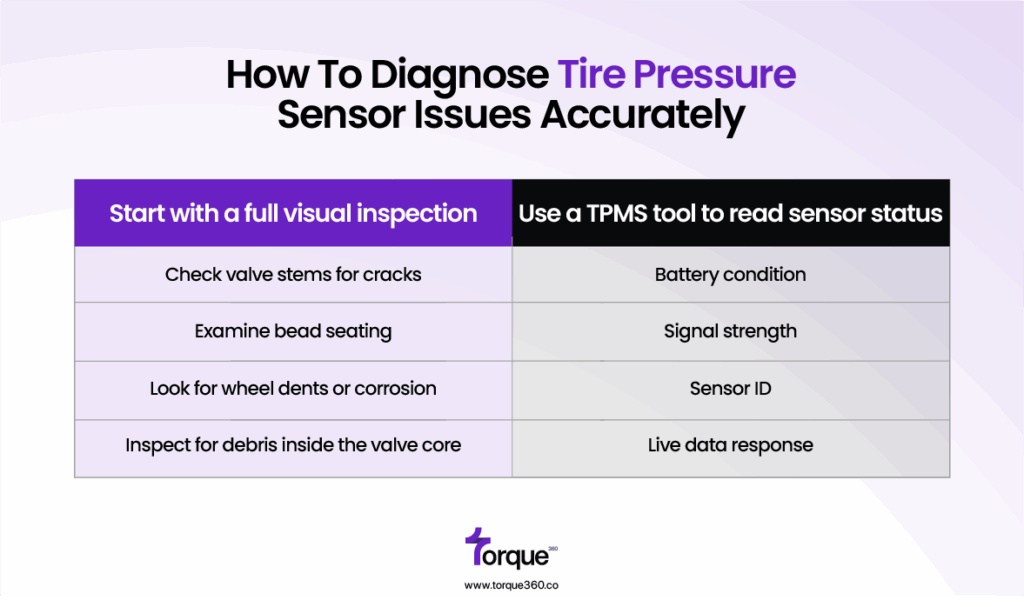
Compare scan data with the actual tire pressure.
A TPMS scan tool tells you what the sensor thinks the pressure is. However, that doesn’t always match reality. In fact, a survey of U.S. repair shops found that 28% of TPMS complaints were traced back to sensors reporting inaccurate pressures.
A calibrated manual gauge gives you a reliable benchmark. It shows whether the sensor is drifting, lagging, or producing outdated values. A difference of even 2–3 PSI can indicate a weakened battery, a clogged valve core, or a sensor struggling to wake up. This comparison gives you a clear reference point. It helps you determine if the issue is electronic or caused by incorrect tire pressure.
Confirm the issue with a sensor activation test
Many sensors don’t send data continuously. They rely on motion, frequency triggers, or wake-up signals to broadcast. An activation test makes the sensor respond immediately, giving a true pass-or-fail reading. If the sensor doesn’t activate or gives erratic data, you have clearly identified a failing unit. This prevents guesswork and avoids replacing parts that are functioning normally.
Document each finding for accuracy
Clear documentation elevates the technician’s workflow and builds customer trust. Record photos, tool readings, and pressure notes to keep a clear service trail. This is where Torque360’s digital inspections simplify the process. Technicians can record each step with photos and attach findings automatically. They can give customers a clear report that speeds approvals and prevents confusion.
Common Signal Behaviors Technicians Notice
Before jumping into repairs, recognizing signal patterns helps confirm your diagnosis.
- Weak signal: Appears only at higher speeds
- Delayed signal: Takes several minutes after ignition
- No signal: Activation test fails instantly
Once the diagnosis is confirmed, proceed with the repair using a clear workflow.
Step-by-Step Guide on How to Fix Faulty TPMS Sensor
After diagnosing the issue, repairing a faulty TPMS sensor is clear and structured. Following each step carefully helps ensure lasting results and prevents recurring warnings.
Step 1: Remove the sensor safely
Deflate the tire and break the bead carefully before working on the sensor. Avoid pulling the valve stem at an angle, as this can crack the stem or damage the sensor housing. Use gentle pressure when removing the sensor to protect both the wheel and sensor.
Step 2: Replace or repair the failed component
If testing confirms a dead sensor battery, a full sensor replacement is necessary. If the battery is fine but the valve stem has corrosion or minor damage, replacing the stem may be enough. Check the mounting area for debris; dirt can block the seal or weaken the signal. Using compatible replacement parts ensures long-term reliability.
Step 3: Reinstall and seal properly
During installation, ensure the sensor sits straight and flush in the valve hole. Apply the correct torque to the stem nut to avoid cracking or warping the sensor housing. Sealing the sensor properly stops air leaks and prevents repeated warnings.
Step 4: Perform the relearn procedure
After installation, follow the manufacturer-recommended relearn method for that specific vehicle. Some vehicles support automatic relearn, while others need stationary or OBD-based programming. If this step is skipped or mishandled, wheels may be misread, and TPMS sensor failure warnings may appear.
Step 5: Complete a drive cycle test
A quick test drive after the relearn confirms all sensors are sent correctly. Check the dashboard and ensure all wheels show the correct pressure. This step validates the sensor installation and ensures the system recognizes every wheel.
Step 6: Re-check readings after installation
Finally, confirm that the warning light is off and the system is stable. Match sensor IDs, confirm positioning, and inspect for leaks. This final check confirms the repair is complete and lowers the chance of a repeat visit.
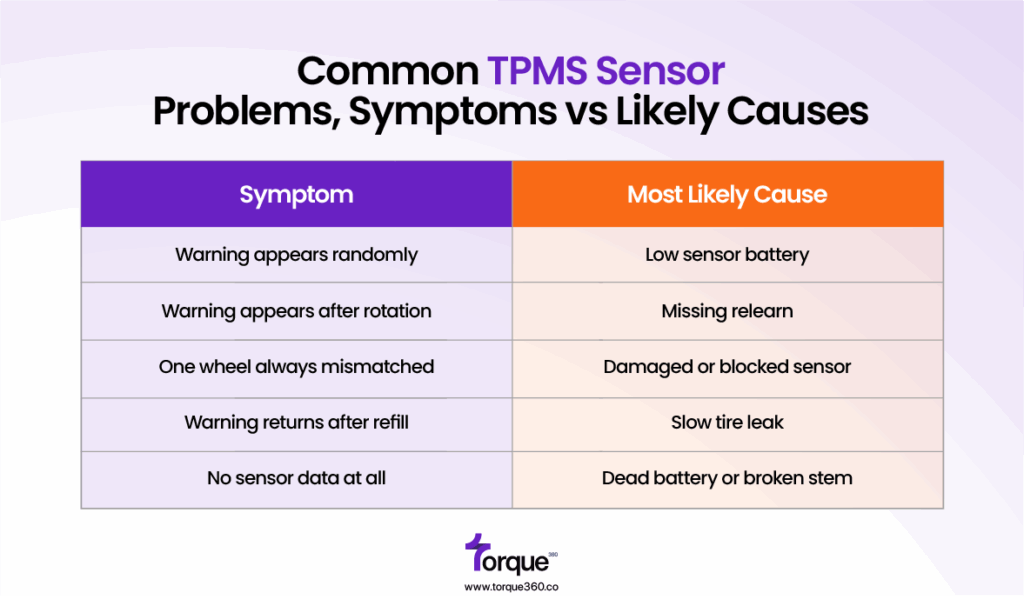
Common TPMS Sensor Failure, Symptoms vs Likely Causes
After the repair, cross-check symptoms against common causes to ensure accuracy.
Taking preventive steps after a repair stops repeated issues and eases future diagnostics.
How To Prevent Recurring TPMS Sensor Problems
It’s easier to prevent repeat TPMS sensor failure than to make many repairs on the same vehicle. A proactive approach helps technicians save time and avoid frustrating customer complaints.
Replace sensors proactively around the seven-year mark
TPMS sensor batteries arrive sealed, and technicians cannot replace them. Over time, the voltage drops, and the sensor becomes less reliable. Replacing sensors around seven years old reduces unexpected warnings and guesswork in diagnostics. Keeping a replacement schedule for high-mileage vehicles ensures consistent performance and fewer callbacks.
Inspect valve stems at every tire service
Valve stems are often overlooked but are a frequent source of slow leaks and sensor failure. During every tire service, check for corrosion, cracks, or buildup around the stem base. Early detection lets you replace the stem before it causes a sensor malfunction. This extends the life of your TPMS units.
Check calibration after tire rotations and swaps
Every time tires are rotated or swapped for seasonal wheels, sensor IDs must be relearned to the vehicle. Skipping this step can cause the system to misidentify wheel positions or throw false warnings. Confirm calibration after any rotation or wheel change to maintain accurate readings.
Keep a record of sensor IDs for faster future diagnostics
Documenting sensor IDs, installation dates, and service history simplifies future troubleshooting. Returning vehicles lets technicians spot worn or recurring sensors. This cuts diagnostic time and creates a reliable workflow that customers can trust.
How Torque360 Supports a Cleaner TPMS Repair Workflow
Technicians keep repair details organized for faster, more efficient work. Managing faulty TPMS sensor repairs from inspection to final verification can be tricky. Torque360 simplifies the process by keeping all information clear & organized, without extra steps.
Capture sensor issues during digital inspections
Digital inspections allow technicians to document every finding during a TPMS service. Attach photos of damaged valve stems, corroded sensors, or low battery readings. This ensures technicians record each issue with images. This clarity helps the technician remember details & explains the problem to the customer. It reduces confusion and builds trust.
Log all repair steps inside the work order
With Torque360, technicians can log key steps of a TPMS repair in the work order. The software captures sensor or valve stem replacements, procedure notes, and labor. This creates a clear record of the job. This documentation reduces errors & serves as a reliable reference for future service visits.
Track parts availability and replacement sensors
Having accurate inventory data at your fingertips prevents delays in the repair process. Torque360 lets technicians check sensors, valve stems, and parts stock in real time. This ensures technicians can complete repairs without waiting for parts to arrive. It improves efficiency and customer satisfaction.
Share clear updates with customers
Built-in messaging tools simplify communication. Technicians can send inspection results, estimates, and approval requests to customers. It can also include photos and notes. This transparency keeps the customer informed. It allows for quick approvals and minimizes back-and-forth phone calls or misunderstandings.
Maintain a clean service history for future visits
Technicians add each faulty TPMS sensor repair to the vehicle’s service history. Tracking sensor age, past replacements, and recurring issues helps technicians diagnose problems faster. This historical data supports proactive maintenance and ensures consistent service quality over time.
Use reporting to identify common TPMS jobs
Torque360’s reporting features highlight trends in TPMS repairs. These include frequent sensor replacements or recurring calibration issues. Shops can use this data to plan parts inventory and schedule preventive maintenance. This data can also provide targeted technician training. Understanding patterns helps reduce repeat failures and keeps your workflow predictable.
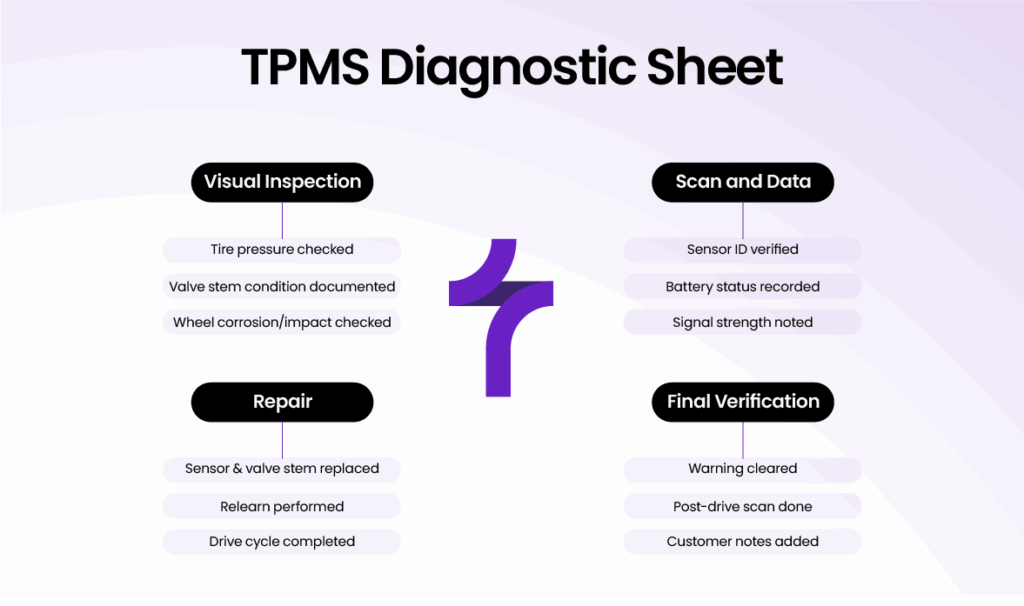
TPMS Diagnostic Sheet
Use this list during inspections to improve consistency:
Bringing Clarity to Tire Pressure Sensor Repairs
Tire pressure sensor issues drain time when the symptoms do not match the actual cause. A structured diagnostic flow gives you clarity and reduces repeat visits. It makes each repair predictable. Document findings, track parts, and present clear information to customers. This way, the entire process becomes far easier to manage.
For a cleaner record of your TPMS work, attach photos and track replacements. Keep the service history organized for the long term. Torque360 supports your workflow the moment a vehicle enters the bay.
Frequently Asked Questions
Why does the TPMS warning light stay on even though the tire pressure appears correct?
The warning light can remain on if the sensor fails to communicate. It can also happen even when you inflate the tires to the proper pressure. Causes often include a weak or dead sensor battery. Also, a blocked valve stem or a sensor that technicians failed to relearn after a tire rotation. Following a structured diagnostic flow helps pinpoint the real issue. It prevents unnecessary sensor replacements as well. This includes inspection, scan-tool check, and activation test.
How long do TPMS sensor batteries typically last, and when should they be replaced?
TPMS sensor batteries usually last 6 to 10 years. As they age, the voltage drops, causing intermittent readings or delayed updates. Replacing sensors around the 7-year mark reduces repeat service visits. Keeping records of sensor age and replacement history helps shops predict failures. It also helps plan for preventive maintenance.
Can valve stem corrosion cause TPMS sensor problems?
Yes, aluminum valve stems exposed to moisture, road salt, or debris can corrode over time. It leads to slow leaks or complete sensor failure. Inspecting stems for corrosion, cracks, or powder residue can prevent recurring TPMS faults. Technicians should perform this during every tire service to extend sensor life. Documenting these inspections creates a clear service history for future troubleshooting.