

The auto repair industry is steadily evolving. Cost control now plays a critical role in long-term success. Inflation and supply chain challenges have increased auto repair shop costs. Rising parts and labor prices have added even more pressure.
California, Hawaii, Maryland, New Jersey, and Virginia lead the nation in auto repair costs. Colorado, Connecticut, Washington, Utah, and Georgia complete the list of the 10 most expensive states for auto repairs.
To stay competitive, shop owners must balance fair pricing with sustainable profitability. At the same time, they need to maintain service quality and customer trust. This requires a clear understanding of costs. Shops must apply auto repair pricing strategies that align with current market conditions.
This guide explains how to manage costs effectively. It covers smart pricing models, operational improvements, and technology that support cost control. These strategies improve profitability for both single-location shops and expanding auto repair businesses.
Understanding Auto Repair Shop Costs
Auto repair shop costs are influenced by several factors, including parts, labor & overhead. In recent years, inflation and ongoing supply chain disruptions have driven up expenses. These increases have made cost visibility more important than ever.
The typical profit margin for components is from 20% to 28%. While the profit margin for labor is between 50% and 65%. To protect margins, shop owners must understand where costs originate. They also need to know how these costs affect auto repair profitability. Clear cost awareness allows businesses to make informed pricing decisions. It helps them avoid reactive price increases that can damage customer relationships.
The impact of rising parts and labor costs on shops
Rising parts and labor costs remain one of the biggest challenges in the industry. Essential components like brake pads, tires, and batteries continue to increase in price. Supply constraints and higher manufacturing costs are driving these increases.
Skilled technicians are in high demand. As a result, shops face increasing labor costs. Shops often need to offer higher wages and benefits to attract and retain talent. These increases, yet, place extra strain on operating budgets. Without structured auto repair pricing strategies, these pressures can quickly disrupt profitability.
3 key cost areas to focus on
Effective cost management starts with prioritizing the areas that most affect margins. Focusing on these areas delivers the greatest financial impact.
1. Parts
Shops can reduce expenses through bulk purchasing and by negotiating supplier agreements. They can also improve inventory management for auto shops to further lower costs. Monitoring parts usage also helps reduce waste and prevent overstocking. The auto parts inventory system gives live tracking of part locations. It also gives real-time stock levels, vendor pricing data, and purchase order management. You know exactly what inventory costs and where savings opportunities exist.
2. Labor
Optimized scheduling, reduced overtime, and ongoing technician training improve productivity. These steps also help shops control labor costs. Incentive programs can further boost auto repair shop efficiency without sacrificing service quality. Dynamic job scheduling helps you assign the right jobs to the right techs. You can track performance and optimize workflow across all service bays.
3. Overhead
Rent, utilities, and operating expenses directly affect margins. Energy efficiency initiatives and regular vendor contract reviews can help lower recurring costs. Successful cost control focuses on efficiency and planning rather than cutting corners. This approach keeps pricing competitive while maintaining high service standards.
3 Smart Auto Repair Pricing Strategies
As expenses rise, shops must use pricing strategies to maintain auto repair profitability. The following pricing models help shops recover costs while staying competitive.
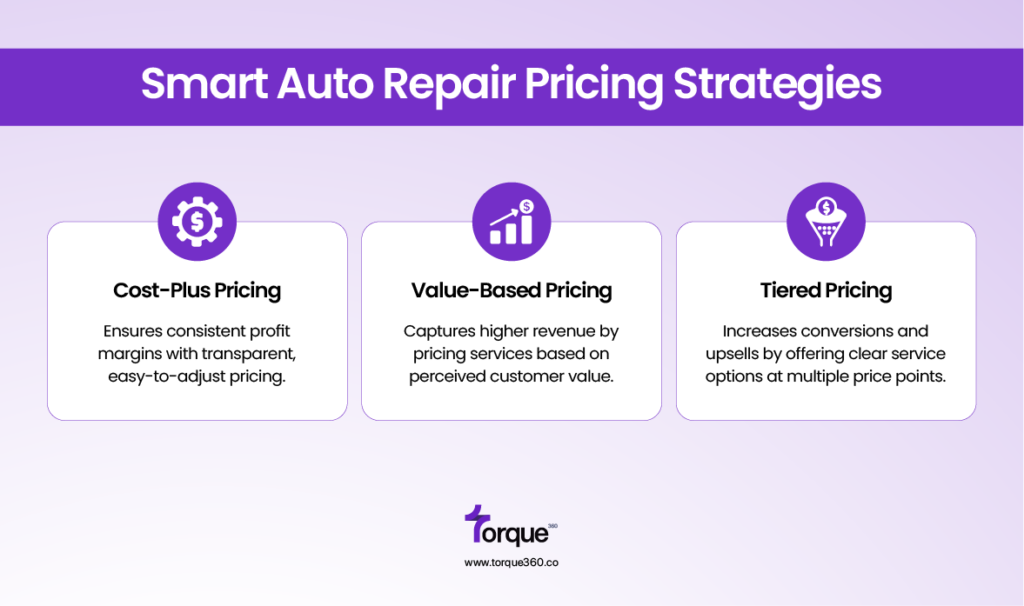
1. Cost-plus pricing
Cost-plus pricing calculates the total cost of a service, including parts, labor & overhead. It then applies a consistent markup to ensure profit. This approach offers transparency and helps shops respond quickly to cost fluctuations.
Benefits of cost-plus pricing:
- Simple and transparent pricing structure
- Easy adjustments as parts and labor costs change
- Reliable margin protection during inflationary periods
Estimate and pricing automation ensures that your cost-plus calculations are accurate. It also helps to be consistently applied across all quotes.
2. Value-based pricing
Value-based pricing focuses on the customer’s perception of value. It does not rely solely on cost. Shops that offer faster turnaround times can justify higher prices. Extended warranties or specialized expertise also allow shops to charge more. These services strengthen customer loyalty.
Benefits of value-based pricing:
- Aligns pricing with customer expectations
- Premium diagnostics and inspection reports
- VIP maintenance packages for long-term customer retention
This strategy helps differentiate your shop from competitors.
3. Tiered Pricing
Tiered pricing provides multiple service levels at different price points. Shops can offer basic, mid-tier, and premium packages to appeal to a broader customer base. These packages also create opportunities for upselling.
Benefits of tiered pricing:
- Accommodates different budgets and service needs
- Encourages customers to choose higher-value options
- Improves satisfaction by offering clear choices
Tiered packages could bundle maintenance with extra services. These include tire checks, fluid top-offs, or safety inspections.
How to Improve Auto Repair Profitability
Auto repair pricing strategies work best when paired with tactics. These increase revenue per visit. They also help improve operational auto repair shop efficiency.
Increase average ticket value
Upselling and bundling allow shops to increase revenue while delivering additional value.
A. Upselling
Service advisors recommend relevant add-ons or premium options during routine maintenance. Examples include tire rotations and fluid inspections.
B. Bundling
Shops group related services into packages at a combined price. This approach encourages customers to complete more work in a single visit.
These approaches help maximize revenue, improve convenience, and strengthen customer loyalty.
Dynamic pricing based on demand
Dynamic pricing adjusts service prices based on demand patterns. During peak seasons, shops can optimize revenue. Promotions during slower periods help maintain a steady workflow.
- Increase prices for high-demand services during peak seasons
- Offer discounts or service bundles during off-peak months
Advanced reporting tools give visibility into seasonality and appointment conversion rates. It also helps with service frequency, enabling data-driven pricing decisions.
Using Technology for Smarter Pricing & Cost Management
Technology plays a key role in managing costs and improving pricing accuracy. Shop management software and CRM for auto repair shops provide data-driven insights. These support better decision-making.
1. Shop Management Software
Shop management software helps track expenses, automate pricing updates, and simplify daily operations. Many shops rely on the best auto repair management software. They can gain real-time visibility into costs and inventory.
Key benefits include:
- Automated estimates and billing
- Inventory control with live part pricing
- Labor tracking and technician performance
- Integrated workflows from inspection to invoice
Torque360 simplifies scheduling, estimates, inspections, and inventory management for auto shops. It also helps with invoices, customer communication, and reporting in a single dashboard. It reduces manual work and gives you a unified view of shop performance.
2. CRM for Auto Repair Shops
A CRM for auto repair shops strengthens customer relationships and increases lifetime value. These systems track service history, preferences, and communication. It makes it easier to identify upsell opportunities and drive repeat visits.
Key benefits include:
- Automated maintenance reminders
- Personalized customer communication
- Improved retention and referral rates
Built-in CRM tools support two-way texting, service reminders, and follow-up messaging. It helps automate campaigns to strengthen customer loyalty and lifetime value.
5 Steps to Improve Pricing & Auto Repair Profitability
Use this checklist to get started:
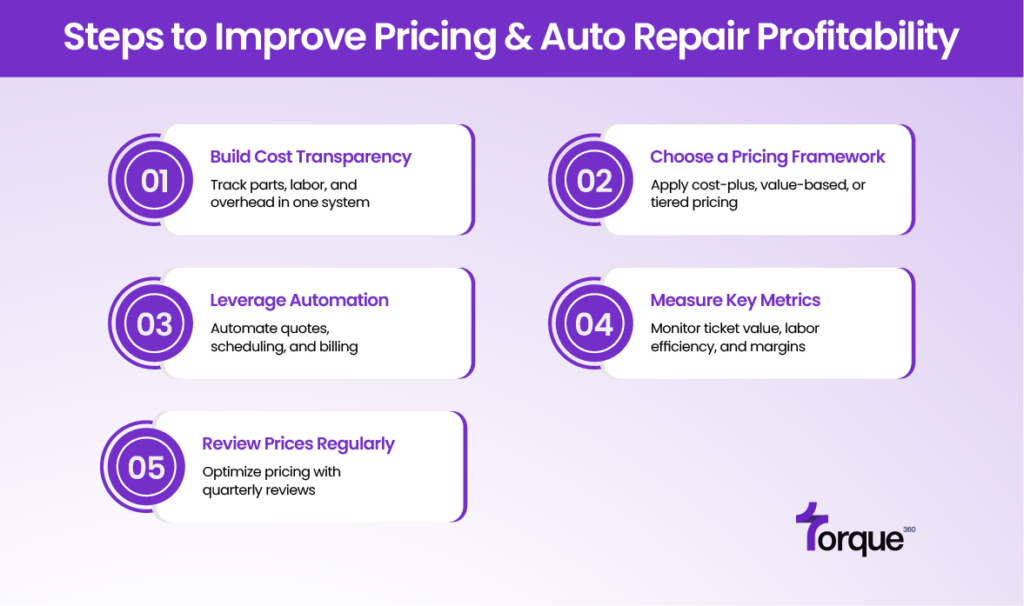
- Build cost transparency: Track parts, labor, and overhead with integrated systems.
- Choose a pricing framework: Pick cost-plus, value-based, or tiered pricing. Test that drives profitability without losing customers.
- Leverage automation: Use the best auto repair management software to reduce manual errors. Speed up quoting, scheduling, and billing.
- Measure key metrics: Monitor average ticket value. Track labor utilization, parts margins, and sales conversion.
- Review prices regularly: Revisit pricing quarterly, not reactively.
Managing Auto Shop Costs for a Profitable Future
Auto repair shop costs continue to rise. Smart pricing and operational efficiency can protect profitability. Cost-plus, value-based, and tiered pricing models provide flexibility. Technology supports better decision-making and improves efficiency.
Shop owners can adapt to market changes by reviewing pricing strategies regularly. They can improve auto repair shop efficiency to stay competitive. Using modern tools also helps them respond effectively to market shifts. These steps ensure rising parts and labor costs do not limit growth. They also position businesses for long-term success.
Frequently Asked Questions
What are the biggest auto repair shop costs today?
The largest auto shop costs come from parts, labor, and overhead. Rising parts prices, technician wages, rent & utilities have increased pressure on shop margins. Understanding how to improve auto repair profitability helps shop owners make smarter pricing decisions.
How can auto repair shops reduce costs without lowering service quality?
Shops can control costs by improving efficiency rather than cutting corners. Better inventory management for auto shops reduces waste. Optimized technician scheduling limits overtime. Regular vendor reviews help manage overhead. These operational improvements support profitability while maintaining consistent service standards.
What pricing strategy works best for managing auto repair shop costs?
There is no single pricing model that fits every shop. Cost-plus pricing helps protect margins during inflation. Value-based pricing supports premium services. Tiered pricing offers flexibility for different customer budgets. Many shops benefit from using a mix of these auto repair pricing strategies.
How do rising labor and parts costs affect auto repair profitability?
Rising parts and labor costs directly reduce profit margins. This is if pricing does not adjust accordingly. Without clear cost visibility & structured pricing strategies, shops may struggle to recover expenses.
How does the best auto repair management software help manage auto shop costs?
Shop management software improves cost control by providing real-time visibility into parts, labor & overhead. Automated estimates, inventory tracking, and performance reporting reduce manual errors. It also supports consistent pricing decisions. This allows shop owners to respond to cost changes with data.