
Running an auto repair shop in the South? Doesn’t it feel like constantly walking on a tightrope? Always battling between competitive prices and maintaining quality services?
Have you found the right labor rate that is neither too high nor too low? Are you able to attract customers with the existing rates and sustain your business?
If not, don’t worry!
Today, we are going to talk about the challenges many shop owners face. We’ll also discuss how to set the right auto repair labor rates in South.
Let’s uncover the truth behind the low rates and how they vary across the region. We’ll also share a business strategy to make your shop more profitable, using Ai in business, and IT WORKS ALL THE TIME!
4 Factors that Influence Auto Repair Labor Rates in South
In the auto repair market, the pricing isn’t just pulled from thin air. Multiple factors influence these rates. Here’s what drives them:
1. Cost of living
The South has a lower cost of living as compared to the other parts of the US. These costs include rent, utilities, and wages. This is the reason why labor rates aren’t too high. Also, the mechanics and shop owners don’t need more money to cover the rent and other expenses.
But the low rates don’t mean low quality. Shop owners offer competitive rates according to the local market. At the same time, they also have to retain profit margins.
2. Level of expertise required
Not all auto repairs are equal. Meaning, a basic oil change service doesn’t require the same level of expertise as rebuilding a transmission. This is why shops that employ skilled technicians charge more. However, this is something that is not widely seen in the South.
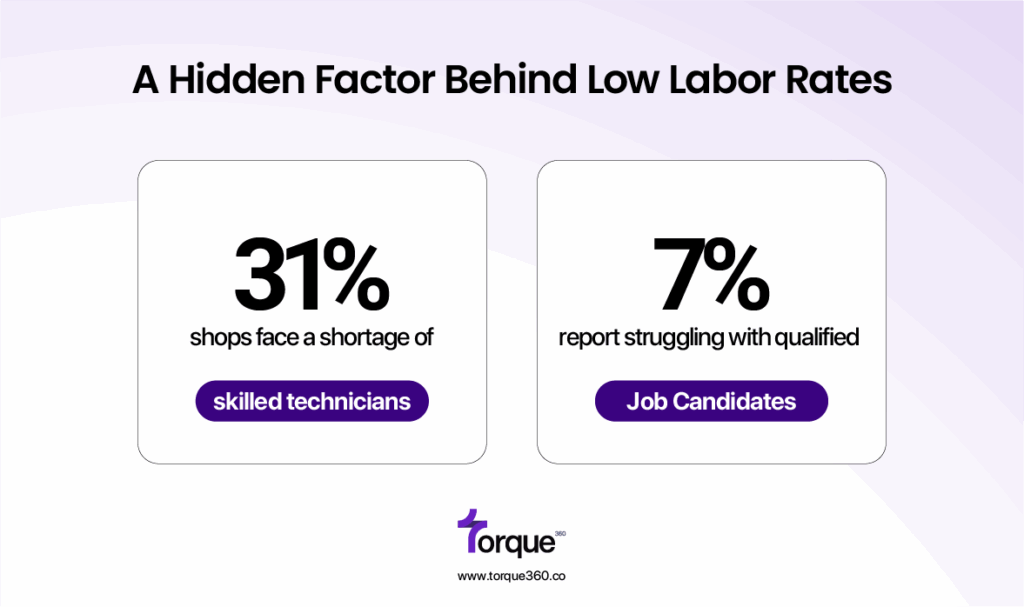
According to Motor’s 2025 State of General Auto Repair Shops in the U.S., 31% of shops say their biggest challenge is a shortage of skilled technicians. Another 7% report struggling with a general lack of qualified job candidates across the board.
The shop owners usually keep the rates a bit low to attract budget-conscious customers. But keep in mind that the expertise of the technicians influences the labor rates. Shops that have ASE-certified mechanics can justify why they charge more.
3. Technological advancements
Modern vehicles are using the latest technologies. They require specialized tools and trained mechanics. You cannot use the basic toolset and old methods to fix a modern car. Investing in the software can be costly for shop owners. But you can justify the costs by explaining the technological advancements you use.
4. Competition is fierce
The South is famous for its love of cars. This means lots of auto repair shops are almost around every corner. More businesses bring more competition. All of this results in challenges in setting and adjusting the right labor rates.
A crowded market may force shop owners to lower their rates to attract more customers. However, in rural areas, shops may charge higher prices due to less competition. Balancing the rate is difficult, especially when considering the factors that influence it.
State Regulations & Licensing
State regulations and licensing impact the operational costs a lot. Each state has a different set of regulations and licensing requirements. This results in the labor rates drastically changing across the region. Here are some state-wise regulations and licensing:
Maryland: A repair facility license is required to perform repairs on vehicles over 6 years old or with work exceeding $1,000.
Delaware: A business license is mandatory for all auto repair shops. Shops must provide written or oral estimates before performing work.
Florida: ASE certification is not legally required, but is often preferred by customers. Some counties may have specific requirements for local ordinances.
Virginia: A repair facility license is required to perform repairs on vehicles over 6 years old or with work exceeding $1,000. An inspection station license is necessary for conducting safety and emissions inspections.
West Virginia: Shops must provide itemized written estimates before repairs. Work guarantees are required to guarantee repairs for at least 90 days or 4,000 miles.
North Carolina: Safety and emissions inspections are mandatory in certain counties. Technician certification is required for conducting inspections.
Georgia: No state-level license is required. Shops should check with local authorities for any specific requirements.
Texas: Cities like Grand Prairie require an Automotive Related Business Permit (ARB). Shops must adhere to Texas Commission on Environmental Quality (TCEQ) regulations.
Kentucky: Shops must carry garage liability insurance.
South Carolina: A business license is required at the local level. No specific state-level regulations.
Tennessee: Shops must ensure their location complies with local zoning ordinances. Environmental permits are required for handling and disposing of hazardous materials.
Oklahoma: Shops must post pricing information for common services. Warranty information is required to disclose warranty details to customers.
Arkansas: A business license is required at the local level. No specific state-level regulations.
Louisiana: An occupational license is required from the Louisiana Motor Vehicle Commission (LMVC). Shops must carry liability insurance as per state regulations.
Alabama: No state-level license is required. Shops should check with local authorities for any specific requirements.
Mississippi: No state-level license is required. Shops should check with local authorities for any specific requirements.
Why Are Labor Rates Perceived as Low in the South
Many auto shops in the South advertise their rates as lower than in the Northeast, the West, and the Midwest. The perception is partially true. Here’s where it hides the complex reality:
- The lower living costs in Southern cities and towns reduce the overhead expenses. This results in lower labor rates.
- Less pressure and demand due to less urbanization causes lower rates.
- Customers tend to love affordable auto repair services. This leads to fulfilling the customer’s expectations with lower rates.
Hidden truth? These low rates often don’t mention the hidden costs or quality of services.
How Do Low Labor Rates Affect Auto Repair Shops
Charging too much? You are risking the profits by scaring the customers.
Charging too less? You are unable to meet the operational costs. Putting doubts in the customer’s mind about the quality.
Here’s how auto repair labor rates can impact your business:
Shrinkage of Profit Margins: Lower rates mean you need more repair volume. Only then will you be able to generate profits. This can put a strain on your employees.
Decline in Quality: When shop owners cut costs, they ignore the training part. They often use outdated methods. This can negatively affect the quality of repairs.
Reputation at Stake: Low rates can attract more customers. But it also leaves a bad impression when repair works are done poorly. It could be due to a lack of skills and specialized tools.
The sweet spot for labor rates lies in offering quality repair work at competitive pricing. You have to educate the customers on the skills and tools required for the repair. Only then can you justify the rates.
Labor Rates in the South
Here are the labor rates in the South in 2025. These can help you hit the sweet spot for setting the right labor rates:
| State | Labor Rate |
| Maryland | $141.30 |
| Delaware | $142.15 |
| Florida | $142.74 |
| Virginia | $143.25 |
| West Virginia | $143.25 |
| North Carolina | $144.65 |
| Georgia | $145.34 |
| Texas | $145.86 |
| Kentucky | $146.21 |
| South Carolina | $146.75 |
| Tennessee | $146.80 |
| Oklahoma | $147.81 |
| Arkansas | $148.10 |
| Louisiana | $149.34 |
| Alabama | $149.58 |
| Mississippi | $151.67 |
To view a complete state-wise breakdown of labor rates in the US, click here!
5 Strategies for Setting Profitable Labor Rates
Here are easy-to-implement strategies that can help your business stay competitive and profitable:
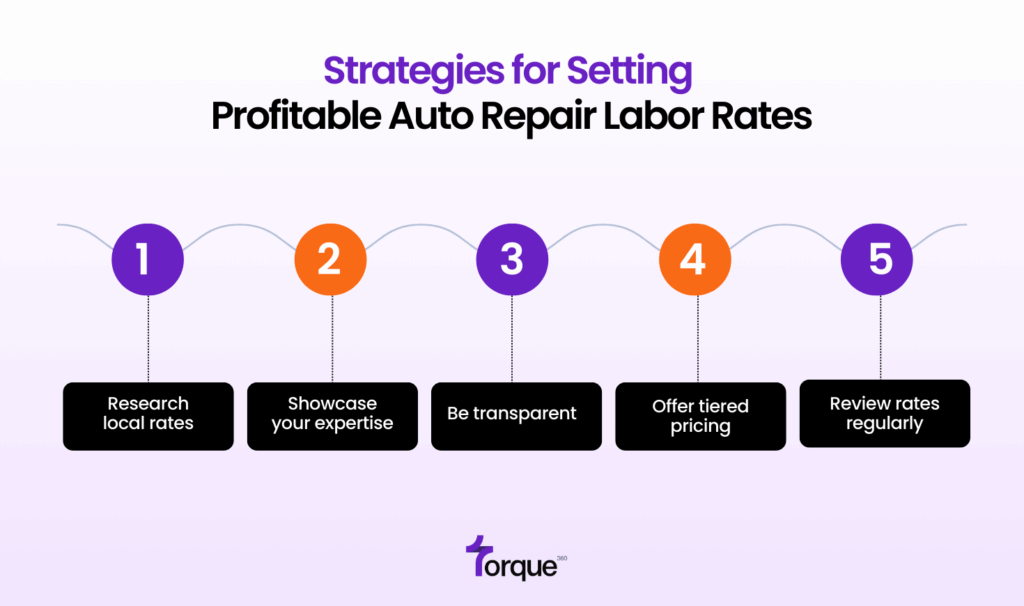
Researching Local Rates: Knowing what your competitors are charging can help you offer better rates.
Showcasing your Expertise: Show your authenticity by showcasing your certifications. Another way is to offer specialized services. This justifies the pricing without any question.
Transparency: Transparency is the soul of any business. In the auto repair industry, the more transparent you are, the more trust you gain.
Tiered Pricing: When you are charging high, you need to balance it by offering discounts. You can create multiple packages for different customers with different budgets.
Regular Reviews: Regularly review the labor rates to meet the market conditions.
The Untold Truth About Those Low Prices
The reason why labor rates are lower in the Southern region is a perfect example of all that glitters is not gold.
There can be some serious issues behind such low rates, such as:
- Unqualified technicians
- Outdated tools and equipment
Here’s a list of essential equipment that you must have in your shop. However, not every shop that charges lower rates is trying to take advantage of its customers. Some auto repair business owners charge moderately while offering the best services.
The Role of Technology in Managing Labor Costs
Torque360 auto repair shop management software can help shop owners calculate labor rates. You can set fair rates by utilizing technology. Moreover, you can track repair times, employee productivity, and customer billing efficiently.
Conclusion
When it comes to auto repair labor rates in South, don’t believe everything you see. You ought to learn about the untold truths about the auto repair industry in 2025. While some shop owners keep their labor rates low to attract customers, this doesn’t mean you should do the same.
The neighboring shop may be charging less for low-quality services. If you lower your rates as well, the customers might perceive that you are doing the same thing. Understanding the hidden factors can help you make an informed decision. This ensures long-term success and profitability.
Always remember, fair pricing isn’t about reducing numbers.
Frequently Asked Questions
1. Why are labor rates in the South often lower than in other regions?
Labor rates in the South are typically lower because of the region’s reduced cost of living. This includes lower rent, wages, and utilities. Additionally, intense competition among auto repair shops pushes prices down, especially in urban areas where shops are densely located.
2. Do lower labor rates mean cheaper or lower-quality repairs?
Not always. While some low-rate shops may cut corners or use outdated tools, many maintain high-quality standards despite competitive pricing. The key difference lies in the shop’s investment in technician training, certifications, and technology. That’s why it’s essential to look beyond the price and consider the value being offered.
3. What factors influence labor costs the most in auto repair?
Labor costs in auto repair are influenced by the local cost of living and the skill level and certifications of the technicians. They also depend on how much a shop invests in advanced tools and diagnostic software. Additionally, the level of competition in the area plays a role. State and local regulations also play a role, as compliance can add to operational costs. All these factors together determine how much a shop needs to charge to remain profitable while still offering quality service.
4. How can I justify higher labor rates to my customers?
Transparency and education are key. Explain the value your shop provides, talk about ASE-certified technicians, advanced diagnostic tools, or a better warranty policy. Highlighting the quality of your service, attention to detail, and long-term reliability can help customers understand why your pricing is fair and justified.
5. Are labor rates consistent across all Southern states?
Labor rates vary significantly across Southern states due to differences in local economies. Other factors include licensing requirements, environmental regulations, and market saturation. For example, Mississippi currently has some of the highest labor rates in the South. States like Georgia or Alabama tend to be more moderately priced. Understanding your local market is essential for staying competitive.