Leaving the money on the table? Are higher labor rates driving customers away from the shop?
Understanding the labor rates game in the West isn’t easy. It’s an art to balance profit and customer satisfaction. Did you know the labor rates in the Western states differ by $30?
Imagine how that can impact your business by staying competitive without compromising quality and profits.
For auto repair shop owners on the West side of the US, the stakes are always higher when it comes to labor rates. Whether in the cityscapes of California or the quiet towns of Idaho, UNDERSTANDING THE RATES IS CRITICAL!
How do you know what the average auto repair labor rates in West look like? Is your shop charging more than the market, or are you underselling your services?
This blog answers all your questions. Keep reading to understand the factors that shape labor rates and avoid pitfalls. Towards the end, we’ll share some actionable tips to improve your pricing strategy.
The West’s Labor Rate Landscape
In 2025, the labor rates in the West are from $136.74 in Hawaii to $151.18 in Wyoming. These rates are widely influenced by several factors, such as:
- Cost of Living
- Demand for Specialized Skills
- Technician Shortage
- Competition Among Shops
- Rural vs. Urban Dynamics
- State Regulations and Licensing
Urban areas like California and Colorado charge higher rates because of increased service demand and operational costs. Due to varied market dynamics, rural states like Wyoming and Montana have comparatively low rates.
Labor Rates: The Foundation of Profitability
Labor rates are the only part of your business that can make or break your auto repair business. It is like a statement about your shop’s value.
Rates too high? You lose customers.
Rates too low? Struggle with covering the costs and attracting skilled mechanics.
And the trickiest part? Labor rates in the Western US vary dramatically.
Why is there a big gap between the states?
Let’s look at the factors that play a role in this gap!
Factors Driving Auto Repair Labor Rates in West
Before you set or adjust your shop’s labor rates, it is important to understand the factors that can help you set fair rates.
1. Cost of living
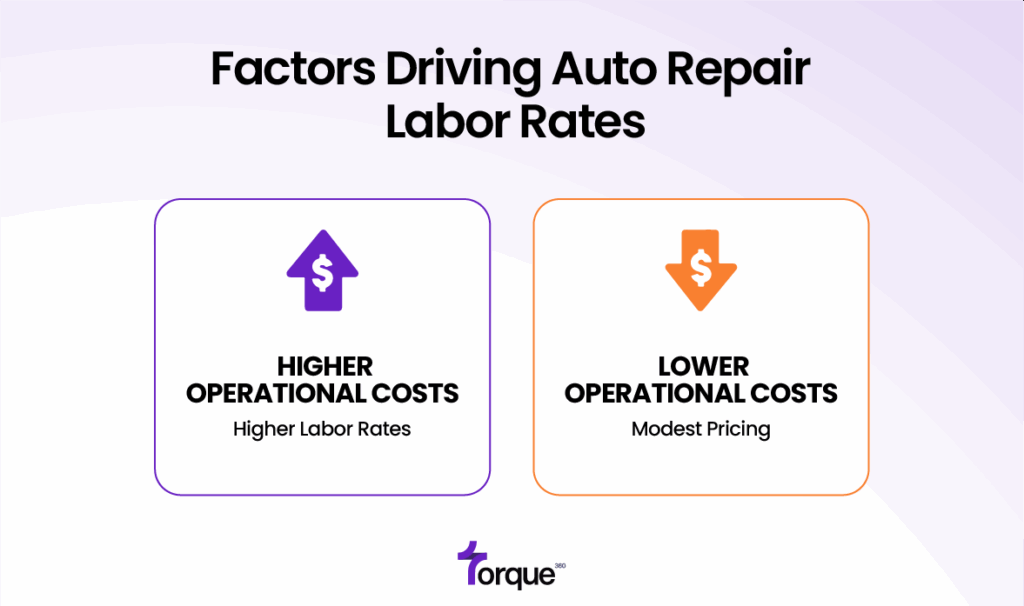
Naturally, the states with higher living costs result in higher labor rates. For instance, California has skyrocketing real estate rates.
Higher operational costs → higher labor rates.
Similarly, Arizona and Nevada have lower overhead costs.
Lower operational costs → modest pricing.
2. Demand for specialized skills
Modern vehicles do not work on older systems anymore. Skilled and certified mechanics are required to inspect and fix modern vehicles. They know how modern hybrid systems work. Auto repair shops that offer specialized services are prone to charging a premium. The high demand for these services in densely populated areas also contributes to the higher rates. However, shop owners may lower their rates in less populated areas to attract customers.
3. Technician shortage
It’s no secret that the auto repair industry is facing a serious technician shortage in 2025. This shortage is also impacting the Western US. Due to a lack of skilled technicians, there is a longer waiting queue for repairs from the shops’ only qualified technicians. Shops that employ these technicians often charge more because of their expertise.
4. Competition among shops
Overcrowded cities like Denver and Las Vegas have more vehicles.
More vehicles → more auto repair shops.
This situation creates an intense battle among the competitors. Their rates often fluctuate to attract more customers and stay competitive.
5. Rural vs. urban dynamics
Rural and urban dynamics are vital at varied rates across the region. Urban centers often have higher rates because of higher rent and wages. Meanwhile, rural cities and towns offer lower rates because of fewer overheads and customer expectations for premium repairs.
6. State regulations and licensing
Some Western states have business-friendly regulations and licensing requirements. While others have stricter ones. Here are some state-wise rules and licensing requirements:
1. Hawaii
According to the Hawaii Department of Commerce & Consumer Affairs, auto shops must:
- Obtain a General Excise Tax license.
- Comply with state consumer protection laws, including providing written estimates before repair work begins.
2. Nevada
According to the Nevada Secretary of State, repair facilities must:
- Require a state business license.
- Provide written repair orders and itemized invoices to customers.
- Technicians may need certifications depending on the service offered.
3. Arizona
According to the Arizona Registrar of Contractors, auto shops must:
- Have a valid business license.
- Follow Arizona’s consumer protection laws, including providing estimates and warranties.
- Specific certification is required for emissions inspections.
4. Oregon
According to the Oregon Department of Justice, repair shops must:
- Register with the state.
- Comply with Oregon’s Automotive Repair Dealer Law, which mandates written estimates and itemized billing.
5. Washington
According to the Washington State Department of Licensing, auto repair shops must:
- Require a valid business license.
- Adhere to the Motor Vehicle Repair Act.
- Ensure transparency with customers via written estimates and detailed invoices.
6. Utah
According to the Utah Division of Consumer Protection, auto shops must:
- Have a business license.
- Comply with the Motor Vehicle Repair Act, including providing written estimates and repair guarantees.
7. Idaho
According to the Idaho Attorney General’s Office, shops must:
- Obtain a business license.
- Follow consumer protection laws requiring written estimates and transparent billing.
8. California
According to the California Bureau of Automotive Repair, repair shops must:
- Register with the Bureau of Automotive Repair (BAR).
- Provide written estimates.
- Comply with California’s Automotive Repair Act, including consumer complaint handling and repair warranties.
9. New Mexico
According to the New Mexico Regulation and Licensing Department, shops must:
- Be licensed as a motor vehicle repair dealer.
- Follow regulations requiring written estimates and disclosure of parts used.
10. Montana
According to the Montana Department of Labor & Industry, auto shops must:
- Require a state business license.
- Provide customers with written estimates and warranties under Montana consumer protection laws.
11. Alaska
According to the Alaska Department of Commerce, Community, and Economic Development, shops must:
- Have a business license.
- Comply with Alaska’s consumer protection statutes, including providing written estimates before work and itemized billing.
12. Colorado
According to the Colorado Department of Regulatory Agencies, auto repair businesses must:
- Obtain a state sales tax license.
- Comply with the Colorado Auto Repair Act, which requires written estimates and transparent billing practices.
13. Wyoming
According to the Wyoming Attorney General, shops must:
- Have a business license.
- Follow consumer protection rules mandating written estimates and disclosure of repair costs.
The Hidden Challenges of Setting the Right Rate
A customer enters a shop offering a $20 lower labor rate than yours. What would your initial thoughts be?
Of course, you will think, what if the customer never chooses your shop again?
It’ll be tempting to lower your rates just to beat the competitor. But have you considered the consequences?
If not, let’s go through those consequences together.
1. Perception of Quality
Many customers perceive lower rates as associated with low-quality services. If you lower your rates to match your competitors, your pricing may work against you.
2. Unprofitable Operations
If you slash your rates, you may encounter some major cost-covering issues. You may not be able to cover the rent, wages, and parts, which will all eat into your bottom line.
3. Employee Retention
If you are not paying competitive wages to your employees, your skilled mechanics may leave your shop and start working elsewhere. This way, you will be understaffed in a matter of months.
Solution?
Instead of cutting costs, you should start educating your customers. Explain to them the value you bring with unmatched expertise, premium tools, and a reliable service.
Strategies to Adjust Your Ideal Labor Rates
Here’s a roadmap to set fair and profitable labor rates in the West:
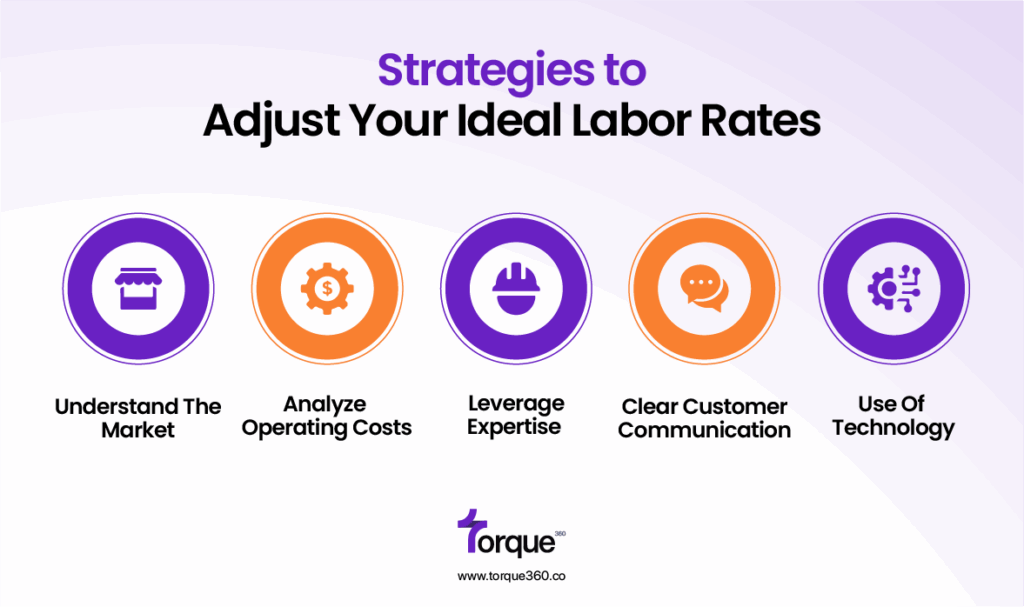
1. Understand your market
The first and foremost thing is to research your state’s local auto repair market. Once you know what auto shops charge, you can set an ideal rate. You can also use auto repair shop management software to help benchmark rates. The tools ensure that you are neither overpriced nor undervalued. It is best to assess your local competitors regularly to see where your rates stand.
2. Analyze operating costs
The second important strategy is to break down and make a checklist of your expenses. These can be rent, utilities, tools, salaries, etc. Then, add a profit margin to ensure long-term sustainability. Don’t forget to add investment in certifications, specialized tools & services, and auto repair software. These can be costly, but they justify your high labor rates.
3. Leverage expertise
Hire experts. That’s very important. When you have a team of experts in your shop, customers will be willing to pay higher rates for professional services. Value-driven packages should also be introduced to build customer loyalty. You can offer them discounts on specific services and specialized packages, earn loyalty points, and implement a rewards system.
4. Clear customer communication
Transparency is vital in any business. In the auto repair business, you should communicate clearly with your customers. Explain the services and pricing to them so there are no discrepancies at the time of payment. Communicating a detailed breakdown also helps build customer trust and justification of the costs.
5. Use of technology
Using technology in your shop can save you time and administrative costs. Many shop owners are replacing manual methods with automated ones. Using Torque360, you can easily track labor hours and calculate rates accordingly, all without manual effort. Automation is no longer a trend but a necessity.
Labor Rates in the West
| State | Labor Rate |
| Hawaii | $136.74 |
| Nevada | $138.58 |
| Arizona | $138.78 |
| Oregon | $139.62 |
| Washington | $142.59 |
| Utah | $142.93 |
| Idaho | $143.84 |
| California | $144.56 |
| New Mexico | $145.82 |
| Montana | $147.28 |
| Alaska | $148.66 |
| Colorado | $148.66 |
| Wyoming | $151.18 |
For a complete state-wise labor rates breakdown, click here!
Leaving Profits on the Table?
If you are still relying on outdated methods to set labor rates, you are paying more than you think. The Western auto repair market is highly competitive, so striking the right balance is essential.
A market study in 2025 shows that over 70% of customers are willing to pay higher rates for specialized and exceptional auto repair services.
Setting the right auto repair labor rates in West is not more about a financial decision. With factors like geography, overhead costs, and competition in the market, it is a strategic move.
So, don’t wait for the profits to fall from the sky. Start using Torque360 auto repair shop management software and MAKE THE ADJUSTMENTS NOW!
Frequently Asked Questions
1. Why do labor rates in California differ so much from states like Idaho?
California’s higher cost of living, strict vehicle regulations, and demand for specialized auto mechanics drive up rates. Idaho’s lower overhead results in more affordable pricing.
2. How do I explain rate increases to loyal customers without losing them?
Be transparent. Share how operational costs (like utilities or certifications) impact rates. Offer loyalty discounts to soften the impact.
3. Should I drop my labor rates to compete with nearby shops?
Not necessarily. Lowering your rates can hurt your perceived value. Instead, highlight your shop’s unique offerings, like expert certifications or premium customer service.
4. How can I attract customers looking for cheaper repairs?
Introduce flexible options, such as basic tune-ups or payment plans. Educate them on why investing in quality service saves money in the long term.
5. Should I adjust my labor rates based on customer feedback?
Customer feedback can provide valuable insights into perceived value and help guide pricing adjustments.