
Running an auto repair shop involves a lot of moving parts. Diagnosing issues to fixing cars and managing customer expectations. There’s no shortage of work. One area that can often cause headaches is writing an auto repair invoice that is accurate, professional, and easy for customers to understand.
According to Quadient, 56 % of U.S. small businesses report being owed money from unpaid customer invoices. These businesses carry an average of about $17,500 in outstanding payments. It is a clear sign of how common late or unpaid invoices are for service businesses.
A mechanic invoice isn’t just a bill. It’s a critical document that reflects your shop’s professionalism and ensures you get paid accurately and promptly. For that, understanding how to create a proper automotive repair invoice is essential.
In this guide, we’ll walk you through the process of creating effective car repair invoices, why they matter, and how Torque360 can help.
How a Professional Auto Repair Invoice Benefits Your Shop
Success in the auto repair industry hinges on balancing service quality, customer relationships, and solid financial practices. An effective invoice plays a key role in this balance. It provides an official transaction record while also supporting payment collection and transparency.
In fact, according to Gitnux, 85% of automotive consumers in the U.S. expect transparent communication about repair costs before service begins. This makes clear, detailed invoices essential for meeting customer expectations and building trust.
- Build customer trust: Clear and detailed invoices ensure there’s no confusion about the charges.
- Improve cash flow: Accurate invoices make it easier to get paid on time.
- Maintain legal protection: A professional auto shop invoice helps avoid disputes and is useful for tax or legal matters.
If you’re not creating automotive repair invoices that reflect the quality of your work, you risk sending the wrong message to your customers. A vehicle repair bill should be more than just numbers on paper. It should be a reflection of your professionalism and the transparency you offer.
7 Key Components of an Effective Automotive Repair Invoice
Creating an automotive shop invoice is simpler when you break it down into essential elements. Each section plays a key role in making the invoice clear, professional, and legally sound. Here’s a breakdown of the key components of a mechanic invoice:
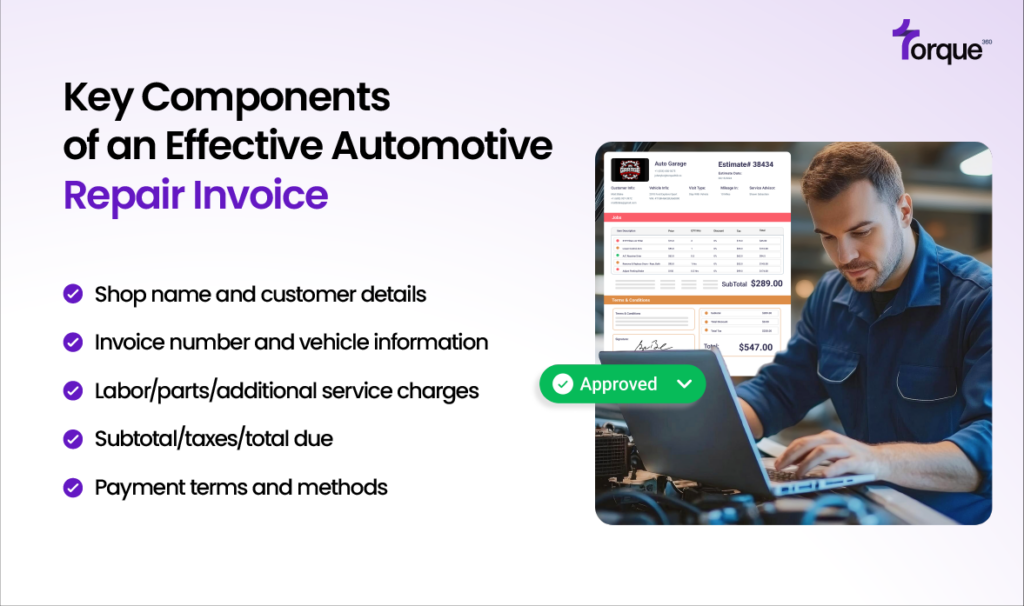
1. Business and Customer Details
The first part of your auto repair invoice should clearly list both your shop’s and the customer’s information. This ensures proper identification and communication. Include:
- Shop Name: Your shop’s name, address, and contact information (phone, email).
- Customer Details: The customer’s name, phone number, and email address.
- Vehicle Information: The vehicle’s make, model, year, and VIN (Vehicle Identification Number).
2. Unique Invoice Number
Every auto repair shop invoice must have a unique invoice number for easy tracking and reference. This makes it simple to organize transactions and locate specific invoices. Include:
- Unique Number: Assign a distinct number to each invoice for identification.
- Tracking and Reference: Allows both you and your customer to refer to a specific transaction quickly.
3. Date of Service
The date of service is important for both the customer and your records. It ensures both parties know when the service was completed, which is useful for warranties and taxes. Include:
- Completion Date: The exact date when the repair or service was completed.
- Record Keeping: Helps with maintaining accurate financial records and meeting tax obligations.
4. Itemized List of Services and Parts
This section is the heart of your mechanic car repair bill, as it breaks down all services and parts used. This ensures full transparency. Include:
- Labor Charges: Specify the number of hours worked and the hourly rate.
- Parts and Materials: Itemize each part used, including part numbers and cost.
- Additional Services: List any extra services, like diagnostics or testing, and their costs.
5. Subtotal, Taxes, and Total Amount
Clear pricing helps your customer understand exactly what they are paying for. After listing all charges, show the subtotal, taxes, and the final amount due. Include:
- Subtotal: The total cost for parts, labor, and services.
- Taxes: Any applicable sales tax or local tax, with the rate clearly specified.
- Total Due: The final amount the customer owes after taxes are applied.
6. Payment Terms and Methods
Be clear about when and how payment is expected to avoid confusion. This ensures you get paid on time. Include:
- Payment Terms: State whether payment is due immediately, within a set number of days (e.g., “30 days”), or upon auto repair shop receipt.
- Payment Methods: Clearly list the accepted methods of payment, such as credit cards, checks, or online payments.
7. Terms and Conditions
Include any important policies or agreements that both you and your customer should be aware of. This protects both parties. Include:
- Shop Policies: Any warranties on parts or services provided.
- Late Fees: Specify any additional fees for late payments or missed deadlines.
- Liability Clauses: Include disclaimers regarding your shop’s responsibility for certain issues or damages.
How to Format Your Car Repair Invoice
Now that you know what to include, let’s talk about how to make sure your car repair invoice looks professional and is easy to read. Consider these formatting tips:
- Use clear fonts: Stick to simple, easy-to-read fonts like Arial or Times New Roman.
- Keep the layout simple: Group related information together (e.g., all business info at the top, followed by customer details, then the itemized list).
- Use bold or italics for key information: Highlight the most important details, such as the total amount due, to make it easy for customers to spot.
- Include your logo: Personalize your invoice with your shop’s logo to make it look more official.
3 Options for Creating an Invoice for Car Repair
There are several ways to create an auto repair shop invoice, depending on your preferences and the size of your operation. Below are a few options:
1. Manual Templates
For smaller shops or those just starting, using a blank car repair invoice template can be a quick and cost-effective solution. These templates can be downloaded and filled out manually. While it’s a good starting point, it can become complicated as your shop grows.
2. Invoice Books
An auto repair invoice book is a physical book where you can handwrite invoices. It’s ideal for shops that still handle a lot of transactions offline. However, it lacks the convenience and accuracy of digital tools.
3. Invoicing Software
If you want to improve efficiency and accuracy, investing in invoicing software is a great option. Torque360 offers auto repair shops easy-to-use, customizable invoice templates that can be completed digitally. It simplifies the process, reduces errors, and helps you stay organized.
How Auto Repair Invoice Software Benefits Your Shop
Let’s face it, managing invoices manually can be time-consuming and prone to mistakes. With Torque360 auto repair invoice software, you can:
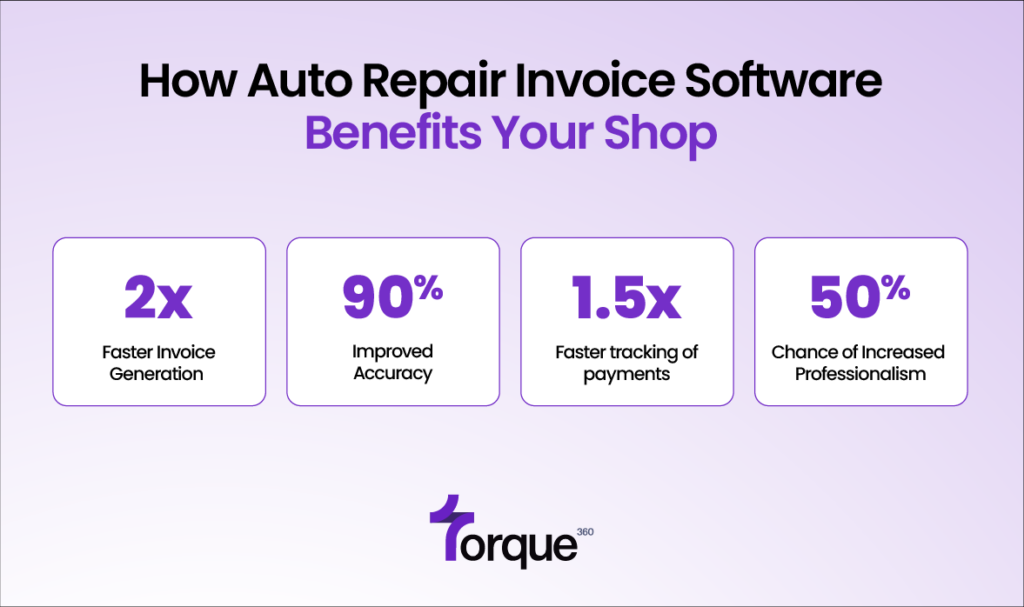
- Save time: Generate and send invoices within minutes, up to 2x faster than manual processing.
- Improve accuracy: Automated calculations reduce human error by around 90%, ensuring invoices are correct the first time.
- Track payments: Easily monitor outstanding invoices and follow up when necessary, helping you collect payments up to 1.5x faster.
- Enhance professionalism: Branded invoices show your customers that you care about the details, increasing perceived professionalism by 50%.
Creating an Auto Shop Invoice That Works for Your Business
Crafting an accurate and professional auto repair invoice doesn’t have to be complicated. By including the right details, formatting them clearly, and using the right tools, you can ensure that your car repair invoices are always on point.
Choose to stick with templates or move toward invoicing software. The goal is to provide your customers with a transparent, accurate document that reflects the quality of your work.
If you’re ready to improve the efficiency and professionalism of your invoicing process, consider using Torque360. With features designed specifically for auto repair shops, you’ll have everything you need to create error-free invoices and get paid faster.
Frequently Asked Questions
What should be included on an automotive shop invoice?
An automotive repair invoice should clearly list the services performed, parts used, labor charges, taxes, and the total amount due. It also needs to include both your business and the customer’s contact information, the date of service, an invoice number, and detailed descriptions for each item charged. Including these elements helps your customer understand exactly what they are paying for. It creates a transparent record of the transaction that can be useful for bookkeeping, tax purposes, or warranty claims.
Do I need to include both parts and labor on an invoice?
Yes, both parts and labor should be itemized on an invoice for car repair. Separating these components gives the customer a clear view of what they are paying for in each category and builds trust in your pricing. It also makes it easier for customers to compare charges, verify warranty coverage on parts, and understand how labor rates contribute to the total cost. This level of detail helps avoid confusion and reduces questions after service is complete.
How do I list taxes and fees on an auto repair invoice form?
Taxes and any additional fees should be listed separately on your invoice after the subtotal for parts and labor. You should clearly state the tax rate and the amount charged so that customers can see exactly how the total was calculated. If your state or locality requires specific fees (such as environmental or disposal fees), include them as separate line items. Clear labeling of taxes and fees makes the invoice easier for customers to review and ensures compliance with local billing requirements.
Can a customer request a copy of the original mechanic receipts for parts used on their vehicle?
Yes, a customer can ask for copies of original mechanic receipts or invoices for parts that were used during their repair, especially if those parts were sent out for specialized work or came from an external supplier. Providing this documentation supports transparency, helps customers verify pricing, and can be useful for warranty claims or insurance purposes. Open communication about parts sourcing and cost also strengthens trust between the shop and client.