

Most auto repair shops already offer detailing. Many shop owners still struggle to make it a reliable source of revenue. Car detailing pricing strategy often feels uncertain. Packages lack structure, and sales depend too heavily on discounts. Over time, detailing turns into work that consumes labor without delivering predictable returns.
According to industry insight, the car detailing market size has reached to $1.67 billion. It is expected to grow to $2.7 billion in 2030. The issue rarely comes from a lack of customer interest. Vehicle owners value cleanliness and care. This matters even more when they already trust a shop with repairs. The real problem lies in how detailing service packages are designed and managed. When shops treat detailing as an afterthought, profit margins shrink, and consistency disappears.
This guide focuses on solving that problem. It explains how auto repair shops can price, bundle, and manage detailing services. The focus stays on building sustainable revenue. The goal is to replace guesswork with clarity. This approach turns detailing into a dependable part of shop operations.
Detailing is a High-Margin Opportunity for Auto Shops
Detailing fits naturally into repair shop workflows. This happens when shops approach it with planning and discipline. Labor steps remain predictable. Material usage stays controlled, and customer demand remains steady throughout the year. These factors make detailing easier to manage than many mechanical add-on services. A structured detailing service line makes it easier to increase. Costs and outcomes become easier to measure and refine over time.
Increase profits with detailing
Detailing relies on repeatable processes that technicians can follow with consistency. Interior cleaning follows a consistent process. Exterior protection uses the same steps across vehicles. Surface restoration does not vary widely from one vehicle to another. This consistency makes planning and delivery easier. This predictability gives shop owners more control over labor planning.
Well-structured detailing services support profitability in several ways:
- Labor time becomes easier to estimate
- Material usage stays consistent
- Advisors present services with confidence
- Customers compare options instead of questioning prices
Over time, this structure improves workflow efficiency and reduces billing inconsistencies.
Why unstructured detailing limits growth
When detailing lacks structure, uncertainty spreads across the shop. Pricing varies between customers. Service scope expands during conversations, and discounts become a fallback solution. These patterns weaken margins and strain staff.
Common outcomes include:
- Labor priced below the actual time spent
- Packages that grow without clear limits
- Revenue that fluctuates week to week
Clear structure replaces these issues with defined boundaries. Those boundaries support profitable car detailing services and long-term planning.
Real Revenue Potential of Profitable Car Detailing Services
Detailing margins often outperform basic add-on services. Industry analysis shows auto detailing margins may approach 20% of revenue. This margin level highlights the earning potential of professional detailing services. That profitability becomes achievable when detailing is managed with a clear structure. Also, pricing discipline and performance visibility matter.
Many shops never see the full picture. Detailing revenue often gets buried inside repair orders, making performance hard to evaluate. When shops track detailing as a distinct service category, improvement opportunities become visible.
Detailing improves average repair orders
Detailing performs best when offered during existing service visits. Customers already trust the shop. That trust makes them more comfortable approving extra care for their vehicle. Advisors often introduce detailing during inspections or estimates. This approach aligns naturally with vehicle maintenance.
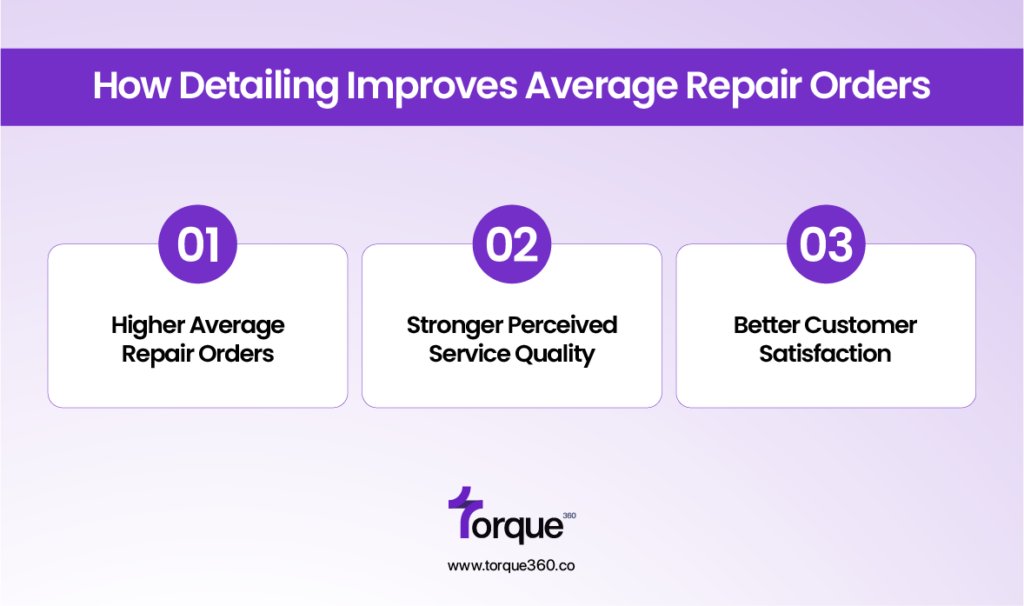
Clean vehicles reinforce professionalism and attention to detail across the entire visit.
Vehicle detailing revenue tips shops often overlook
Many shops lose margin through small but repeated decisions. These issues rarely stand out on individual tickets, but they add up over time.
Common oversights include:
- Underestimating labor time for interior work
- Absorbing material costs instead of assigning them
- Adding services without adjusting price or scope
Tracking real labor time and assigning costs properly helps protect margins. These vehicle detailing revenue tips allow detailing services to scale without operational stress.
Practical Car Detailing Pricing Strategy to Protect Margins
Pricing determines whether detailing supports growth or drains resources. Guesswork pricing creates inconsistency and confusion. A strong pricing approach starts with internal data, not competitor rates.
Pricing based on labor, materials, and time
Each detailing service should reflect actual work performed under normal conditions. Shops enjoy tracking how long tasks take and reviewing that data regularly.
Effective pricing accounts for:
- Labor hours required per service
- Material usage per vehicle
- Overhead contribution
- Target profit margin
This car detailing pricing strategy creates prices that remain stable and defensible.
Why competitor pricing creates risk
Competitor pricing often ignores context. Mobile detailers operate with lower overhead. Large chains rely on volume to offset margins. Repair shops operate under different constraints. Matching outside prices without change often leads to underpricing skilled labor. Pricing based on internal costs supports long-term sustainability.
2 Proven Ways to Structure Auto Shop Detailing Packages
Package design influences both customer decisions and service delivery. Customers want clarity. Staff need consistency. Well-designed detailing service packages support both.
1. Entry, mid, and premium package structure
Most shops succeed with 3 defined options that address different needs.
- Entry packages focus on routine cleaning
- Mid-level packages add deeper interior care and exterior protection
- Premium packages address restoration and long-term vehicle care
Each package should feel complete. Customers should never feel pressured to upgrade.
2. What to bundle and what to exclude
Effective auto shop detailing packages group services that make sense together. Interior tasks stay grouped. Exterior services remain separate. Labor time stays realistic. Avoid including services that extend labor time without increasing perceived value. Clear boundaries protect margins and keep workflows predictable.
When Auto Detailing Deals Make Business Sense
Deals can support growth when shops use them with intention. They become harmful when they replace pricing discipline.
1. Smart use cases for auto detailing deals
Auto detailing deals work best in specific situations:
- Filling slow days or weeks
- Introducing first-time customers
- Supporting seasonal demand shifts
Limited availability preserves value while creating urgency.
2. Why overusing deals hurts profit
Frequent discounts reset expectations. Customers begin to wait for offers instead of valuing full price. Over time, detailing deals for customers replaces structured pricing. Deals should support defined goals, not routine operations.
Detailing Service Promotions to Protect Value
Detailing service promotions do not need price cuts. Value-based incentives often perform better and protect margins.
1. Seasonal and event-based promotions
Seasonal promotions align detailing with real vehicle needs. Interior cleaning before winter and exterior protection before summer address practical concerns. These detailing service promotions educate customers while driving demand.
2. Value-focused incentives that convert
Strong incentives include:
- Priority scheduling
- Complimentary inspections
- Added protection services
These options increase perceived value without reducing price.
Detailing Service Marketing Reaches the Right Customers
Detailing service marketing works best when it informs rather than pressures. Customers who understand value make confident decisions.
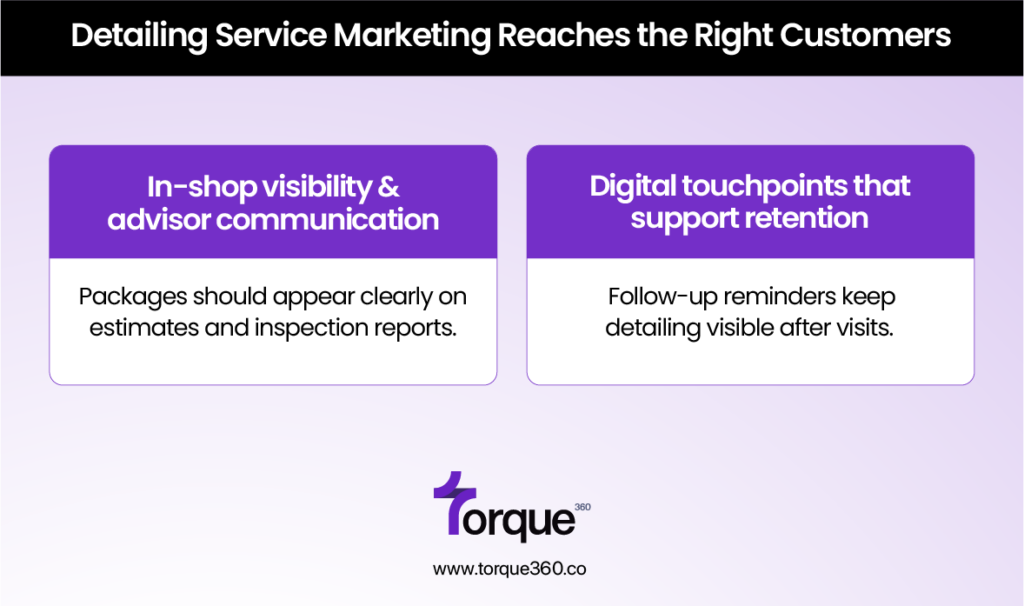
1. In-shop visibility and advisor communication
Packages should appear clearly on estimates and inspection reports. Visibility builds trust and reduces confusion. Advisors should frame detailing as vehicle care that supports safety and longevity. This approach strengthens detailing service marketing without aggressive tactics.
2. Digital touchpoints that support retention
Follow-up reminders keep detailing visible after visits. Timing messages around usage patterns and seasonal exposure helps customers see relevance. Consistent communication supports repeat business.
2 Ways to Turn One-Time Details into Repeat Revenue
Repeat detailing work creates stability. Structured services make follow-up easier for both staff and customers.
1. Timing follow-ups with vehicle use
Interior services follow usage patterns. Exterior services follow environmental exposure. Scheduling reminders around these realities feels helpful rather than intrusive.
2. Retention practices that increase lifetime value
Consistent service definitions simplify repeat visits. Customers know what to expect. Technicians know how to deliver. This consistency supports profitable car detailing services over time.
Costly mistakes shops make with detailing deals
Most mistakes stem from good intentions paired with weak structure.
1. Underpricing labor and expanding scope
Underpriced labor leads to burnout and delays. Expanding scope without adjusting price strains staff and reduces margins. Clear boundaries protect both morale and profitability.
2. Relying too heavily on discounts
When detailing deals for customers becomes routine, value erodes. Pricing discipline supports long-term stability more than short-term volume.
Increase Profits with Detailing Service Packages
Detailing succeeds when shops treat it as a core service rather than a side offering. Pricing discipline sets expectations. Clear structure supports delivery. Controlled promotions protect value. Shops that manage detailing service packages gain predictable revenue and operational clarity. Over time, detailing becomes reliable work that supports growth instead of draining resources.
Frequently Asked Questions
How should auto repair shops price detailing service packages?
Auto repair shops should price detailing service packages based on internal costs. Competitor rates should not drive pricing decisions. This includes tracking actual labor time. It also includes assigning material costs per service and accounting for overhead. Pricing built on real data protects margins. It also keeps packages consistent as demand changes.
Are detailing packages more profitable than individual detailing services?
Detailing packages are often more profitable than individual services. They define the scope upfront and reduce price negotiation. Packages help shops control labor time. They also present clear value to customers and improve workflow efficiency. This structure makes revenue more predictable over time.
When do auto detailing deals make sense for repair shops?
Auto detailing deals make sense when shops need to fill slow periods. They also help attract first-time customers or support seasonal demand. Detailing deals for customers works best when they are limited and goal-driven. Relying on frequent discounts can weaken pricing discipline and reduce long-term profitability.
How can detailing increase average repair orders?
Detailing increases average repair orders when offered during inspections or estimates. Customers already trust the shop and see detailing as part of vehicle care rather than an upsell. This timing improves acceptance rates and reinforces the service experience.
What is the biggest mistake shops make with detailing services?
The biggest mistake shops make is treating detailing as unstructured work. This leads to inconsistent pricing, expanding service scope, and overuse of discounts. Without clear auto shop detailing packages, detailing consumes labor. Defined boundaries are required to deliver reliable profit.