
Oil changes bring customers through your doors every day. They should be fast, simple, and profitable. Too many shops lose time due to unstable equipment and vehicle clearance issues. Slow workflow between bays adds even more delays to the day.
If your technicians waste minutes adjusting lifts or repositioning vehicles, those minutes stack up. That is where car ramps for oil change services can improve efficiency. The right ramps reduce setup time and support safe lifting. They also help you move vehicles through your bays faster.
The U.S. accounts for over 38% of total global car ramp demand. High vehicle ownership and ongoing maintenance needs drive this growth. This trend shows that repair shops and technicians continue to increase their adoption of professional ramps.
This guide breaks down how to choose, use, and manage ramps effectively. We will also connect equipment decisions to workflow systems. This helps your shop run tighter from check-in to invoice.
Why Ramp for Car Oil Change Matters in Modern Repair Shops
Oil changes are high-frequency jobs. Small inefficiencies become large revenue leaks over time. Many shops rely on lifts for every job. Ramps add flexibility for quick-service bays and overflow work.
When used correctly, ramps support both speed and safety. But the wrong choice leads to instability, vehicle damage, or technician risk. Before buying equipment, understand where ramps fit in your workflow.
When a car ramp for service makes more sense than lifts
Lifts handle heavy diagnostics and underbody repairs. But for routine oil service, ramps for changing oil in car setups often reduce prep time.
Ramps work well when:
- You run a quick-lube lane
- You service standard sedans and light trucks
- You want to avoid lift bottlenecks
- You need a portable setup for overflow work
For shops that process high daily oil volume, ramps for car repair can reduce bay congestion. Instead of waiting for a lift, technicians can move vehicles quickly onto ramps and start service.
How auto ramps for oil change impact shop efficiency
Efficiency is not just about tools. It is about systems. When you combine auto ramps for oil change setups with organized digital workflows, you remove friction from the process.
For example:
- Digital work orders assign bays faster
- Technician tracking prevents idle time
- Inventory tools flag low oil or filter stock
- Automated invoicing reduces front-desk delays
When equipment and systems align, oil service becomes predictable. That predictability improves margins.
Types of Car Ramps for Oil Change and Applications
Not all ramps serve the same purpose. Load capacity, material, angle, and surface grip all matter. The right design depends on the vehicles you service. If your shop handles mixed fleets, you need to evaluate more than price.
| Ramp Type | Key Characteristics | Best Use Case |
| Plastic Ramps | Lightweight, corrosion-resistant, lower weight capacity | Ideal for passenger vehicles and light-duty service |
| Steel Ramps | High durability, heavy-load support, requires rust management | Suitable for trucks and high-load applications |
| Composite Ramps | Strong yet lighter design with anti-slip surfaces | Great for mixed-use shops servicing sedans and SUVs |
| Portable Ramps | Movable and flexible for changing shop layouts | Best when rearranging bays, handling overflow, or running mobile services |
| Fixed Ramps | Permanent installation with consistent vehicle alignment | Ideal for dedicated quick-service lanes and high daily oil volume |
| Truck Ramps | Reinforced structure with higher load ratings and wider base | Designed for heavy-duty trucks and fleet vehicles |
1. Plastic vs. steel vs. composite ramps
Most vehicle ramps for oil change fall into three material categories:
Plastic ramps
- Lightweight and portable
- Corrosion-resistant
- Ideal for passenger vehicles
- Lower weight capacity
Steel ramps
- High durability
- Better for heavier vehicles
- Less flexible for portability
- Require rust management
Composite ramps
- Combine strength and lighter weight
- Often include anti-slip surfaces
- Balanced for daily shop use
If your shop services sedans and SUVs, composite ramps often offer the right balance. High-quality models provide strength without adding unnecessary weight.
2. Standard car ramps vs. truck oil change ramps
Vehicle weight changes everything. A ramp built for a sedan cannot safely support a heavy-duty truck. SUV and pickup truck sales made up about 75% of total U.S. car sales. This highlights the dominance of heavier vehicles on the road and the need for appropriate ramps for different vehicle sizes.
If you service fleet accounts, you may need dedicated truck oil change ramps. These offer:
- Higher load ratings
- Wider base support
- Reinforced structural design
- Improved approach angles
Many shops service both personal and commercial vehicles. They often keep separate best truck ramps and best ramps for cars. This helps prevent equipment overload and safety risks.
3. Portable ramps for car repair vs. fixed vehicle repair ramps
Some vehicle repair ramps are designed for permanent installation. Others are portable and flexible.
Portable ramps help when:
- You rearrange bay layouts
- You handle seasonal overflow
- You run mobile services
Fixed ramps help when:
- You operate a dedicated quick-service lane
- You want consistent alignment
- You manage a high daily oil volume
Evaluate how often your bay configuration changes before choosing.
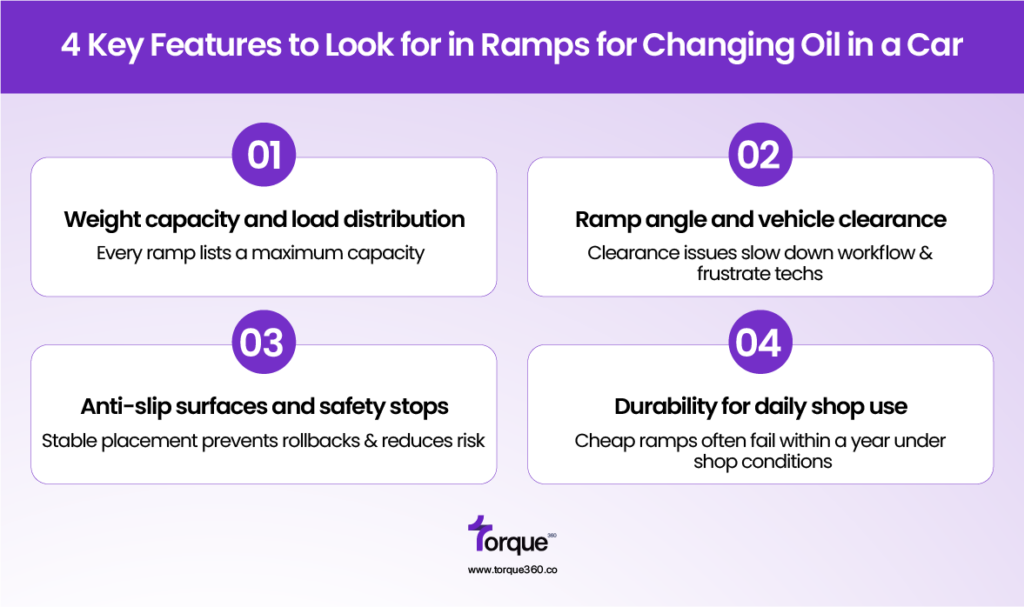
4 Key Features to Look for in Ramps for Changing Oil in Car
Choosing the right car ramps for oil change setups requires more than checking load ratings. Safety, compatibility, and daily wear matter just as much.
1. Weight capacity and load distribution
Every ramp lists a maximum capacity. But real-world use involves dynamic load as the vehicle climbs.
Look for:
- Even weight distribution across the platform
- Structural reinforcement
- Wide tire support
- Stable ground contact
Shops that service light trucks should verify whether their current ramps qualify as auto repair ramps or if they need heavier-duty alternatives.
2. Ramp angle and vehicle clearance
Low-profile cars present clearance challenges. If the ramp angle is too steep, the front bumper may scrape.
When selecting a ramp for oil change, confirm:
- Gradual incline design
- Low approach angle
- Compatibility with lowered vehicles
- Tire width alignment
Clearance issues slow down workflow and frustrate technicians.
3. Anti-slip surfaces and safety stops
Safety reduces liability. High-quality vehicle repair ramps include textured surfaces and wheel stops. Technicians should never rely on guesswork when positioning vehicles. Stable placement prevents rollbacks and reduces risk.
4. Durability for daily shop use
Shops process multiple vehicles daily. Your ramp for car oil change equipment must withstand repeated load cycles.
Inspect:
- Weld integrity
- Surface wear resistance
- Structural reinforcement
- Manufacturer warranty
Cheap ramps often fail within a year under shop conditions.
Workflow Optimization Beyond Equipment
Equipment alone will not fix inefficiency. Many shops invest in ramps for car repair, but still struggle with slow turnaround times because their workflow lacks structure. This is where operational systems matter.
1. Connecting equipment to digital job tracking
When you move a vehicle onto the car ramps for oil change, the job should already be assigned in your shop management system.
With a digital work order system, shops can:
- Assign oil service instantly
- Track technician time
- Record inspection findings
- Attach photos to job cards
- Sync parts usage with inventory
That integration reduces manual errors and speeds invoicing.
2. Managing inventory for oil service
Oil service requires precision inventory control. Running out of filters or oil grades slows bays.
Torque360’s inventory management feature helps shops:
- Monitor oil stock in real time
- Set reorder alerts
- Track supplier performance
- Prevent overstock or understock issues
Even the best car ramp for service setup fails if you lack the right materials.
3. Reporting and profitability tracking
Oil changes seem simple, but margins vary. When using systems that track labor time, parts cost, and technician productivity, shop owners can measure:
- Average service time per vehicle
- Revenue per bay
- Parts profit margin
- Technician efficiency
Data-backed decisions improve long-term growth.
Best Automotive Ramps Safety Practices
Improper ramp use leads to accidents. Protect your technicians and customers by enforcing strict protocols.
When using car ramps for oil change, ensure:
- Flat and level ground
- Wheel chocks on rear tires
- Parking brake engaged
- Clear communication between technicians
- No under-vehicle entry without proper stabilization
Shops that train technicians regularly reduce risk exposure. Even high-quality auto repair ramps cannot compensate for poor safety habits.
Common Mistakes When Choosing the Best Ramps for Cars
Many shop owners buy ramps based on price alone. That decision often creates long-term issues.
Common mistakes include:
- Choosing low-capacity models
- Ignoring clearance specifications
- Overlooking ramp width
- Not verifying compatibility with truck oil change ramps
- Failing to consider long-term wear
Before investing in the best automotive ramps, evaluate your service mix. If 30% of your volume involves heavier vehicles, standard passenger ramps may not suffice. Avoid equipment that limits growth.
Integrating Equipment Decisions with Business Strategy
Your equipment reflects your business model. If oil service drives a large portion of your revenue, you need reliable tools to support it. You also need structured processes to keep operations consistent and efficient.
Shops that combine:
- Proper vehicle ramps for oil change
- Digital workflow systems
- Strong inventory controls
- Performance reporting
build predictable revenue channels. That consistency improves customer retention and technician morale.
Build a More Efficient Oil Service Operation
Oil changes create steady traffic. But without the right tools and systems, they also create delays. Investing in high-quality car ramps for oil change setups improves safety and speed. Pairing those ramps with structured digital workflows improves your entire operation.
When your equipment supports your process, and your software tracks performance, oil service shifts from routine maintenance to controlled, profitable output. Small workflow improvements compound over time. Start with the tools under the vehicle. Then strengthen the system that runs the shop.
Frequently Asked Questions
Are ramps for changing oil in car safe for heavy-duty trucks?
Standard ramps often do not support heavy-duty trucks. Shops must verify weight ratings and use dedicated truck oil change ramps when servicing commercial vehicles. Always confirm manufacturer load specifications before use.
What weight capacity should I look for in auto repair ramps?
Choose the best ramps for cars rated above the maximum vehicle weight you service. For mixed-use shops, consider separate units for passenger cars and light trucks. Never operate at the exact maximum rating to maintain a safety buffer.
Can low-profile sports cars use ramps safely?
Low-profile vehicles require ramps with gradual incline angles. Many standard ramps cause bumper scraping. Verify clearance measurements before purchasing a ramp for oil change applications involving lowered vehicles.
How long do professional-grade auto ramps for oil change last in a busy shop?
High-quality steel or composite ramp for car oil change, used daily, can last several years. Durability depends on load frequency, maintenance, and proper storage. Inspect ramps regularly for cracks, bending, or structural wear.
Should I use ramp for oil change or lifts for quick oil service bays?
Many shops prefer ramps for quick-service lanes because they reduce setup time. Lifts remain necessary for more complex repairs. The choice depends on service volume, bay layout, and vehicle mix.