Modern vehicles continue to grow more complex. New systems like advanced driver assistance systems (ADAS) and integrated electronics are emerging. Diagnosing issues and completing repairs has become more challenging than ever. At the same time, technicians and service advisors face pressure. They have to deliver accurate estimates and clear communication. They must also provide timely service without compromising quality.
You may be wondering whether AI auto repair solutions are too futuristic. Or is it too expensive and disruptive for your shop? The reality is different. In fact, according to Statifacts, the U.S. automotive AI market stood at USD 1.26 billion in 2024. Analysts expect it to grow at a 27% CAGR through 2034. This shows that AI is already becoming a major part of automotive service.
AI tools can support technicians, improve workflow accuracy, and enhance customer trust. And guess what? There is no need to change the way you already work. This blog shows practical ways to apply AI solutions for automotive today. These approaches can help you achieve measurable improvements in your shop operations.
The Challenge Auto Repair Shops Are Facing Today
Repair complexity is rising. Technicians must diagnose issues faster while maintaining quality. Customers expect clarity, accountability, and timely progress updates throughout the repair process. Shops are feeling pressure across many fronts:
- More complex vehicles: Modern ADAS and software-driven systems need deeper diagnostic insight.
- Higher customer expectations: Drivers want clear explanations, transparent estimates, and quick approvals.
- Service advisor workload: Parts sourcing, estimates, communication, and job tracking demand constant coordination.
- Operational holdups: Paper inspections and inconsistent workflows increase the risk of error.
When these challenges stack up, the outcome is predictable. There are slower repair times, lower approval rates, miscommunications, and frustrated teams. Even small delays or inaccuracies can impact both customer satisfaction and profitability.
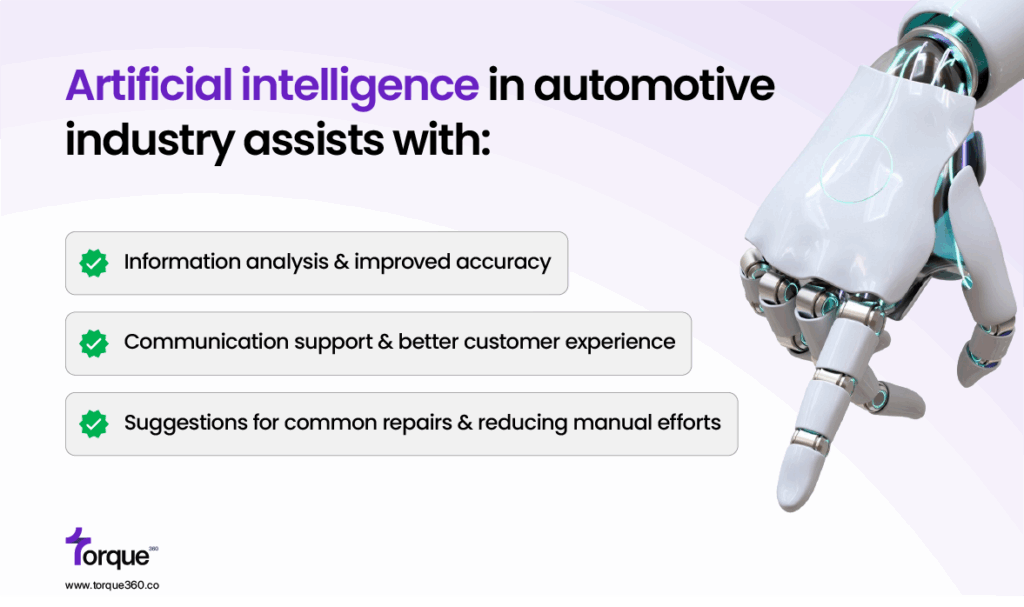
This is where artificial intelligence in automotive industry provides meaningful support. It strengthens diagnostics, repair planning, parts decisions, and customer communication. This makes daily tasks more precise and efficient across the shop.
Where Automotive Repair AI Fits Into the Repair Workflow
AI is already practical, affordable, and usable in auto repair shops today. Applying artificial intelligence in automotive industry complements the expertise of technicians. The most successful shops view AI as a tool for support, not replacement. AI helps technicians enjoy tools that surface guidance and access repair patterns. Technicians and service advisors can perform tasks faster and with greater confidence.
A survey found that 54% of auto repair shops reported increased efficiency. This happened after adopting AI‑powered parts ordering. 78% of technicians believe AI tools improve diagnostic accuracy. Also, predictive maintenance algorithms helped reduce breakdowns by up to 30%. This drives higher productivity, reduces errors, and strengthens customer relationships.
6 Practical Ways Shops Can Use AI Solutions for Automotive
Implementing AI in your shop does not need a complete turnover. Practical, immediately applicable methods exist to support technicians and advisors. These approaches help maintain your existing workflow. These use cases show how automotive repair AI can improve automotive diagnostics. They help make repair orders more accurate and efficient. They can also enhance parts decisions, customer communication, and follow-up processes.
1. Automotive diagnostics artificial intelligence
AI can analyze fault codes, symptoms, and repair history to suggest probable causes. Technicians enter the information, and AI provides step-by-step guidance for testing and verification. This support reduces the time spent troubleshooting complex issues. It also ensures critical steps aren’t missed. Technicians gain confidence in diagnosing vehicles efficiently. Even with advanced systems like ADAS and integrated electronics.
2. More accurate repair orders
AI recognizes patterns in common repairs. It also auto-populates job lines, labor hours, and recommended parts. Service advisors build orders faster and cut errors that delay service. Estimates are consistent across the shop, helping maintain fairness and transparency. Customers receive detailed repair orders that are easy to understand and approve. This helps in improving workflow predictability.
3. Better parts price decisions
AI can compare suppliers and check stock levels. It can also recommend cost-effective alternatives in real time. Advisors no longer spend excessive time calling many suppliers or handling portal checks. This improves shop efficiency and helps meet customer timelines. Shops enjoy lower costs, faster turnaround, and predictable scheduling. This allows technicians to focus on repairs rather than logistics.
4. Clearer customer explanations
AI structures inspection notes and suggests language that customers can understand. Photos and videos pair with contextual explanations to show the issue. Customers feel informed and confident in approving repairs, reducing miscommunication. This shows customers what they are paying for and builds long-term trust.
5. Consistent maintenance follow-ups
AI tracks vehicle mileage, past repairs, and part wear. It helps you to recommend maintenance at the right time. Automated reminders ensure customers return for necessary service without manual tracking. This keeps vehicles safe and helps shops maintain steady revenue streams. Customers appreciate proactive service, which reinforces loyalty and repeat business.
6. Enhanced communication support
AI provides phrasing for service advisors. It helps them explain repairs and address objections with confidence. It ensures conversations are professional, transparent, and customer-focused. Advisors feel supported, which reduces stress and increases confidence in interactions. Customers are more likely to approve work and trust the shop. It improves overall service success.
How Automotive Repair AI Improves Communication & Trust
Clear communication is key to customer satisfaction and repeat business. Automotive diagnostics artificial intelligence supports both technicians and service advisors. It provides structured guidance on how to explain repairs with clarity and precision. By delivering consistent explanations and easy to understand, you can reduce confusion. Moreover, you can ensure customers understand exactly what work the shop requires.
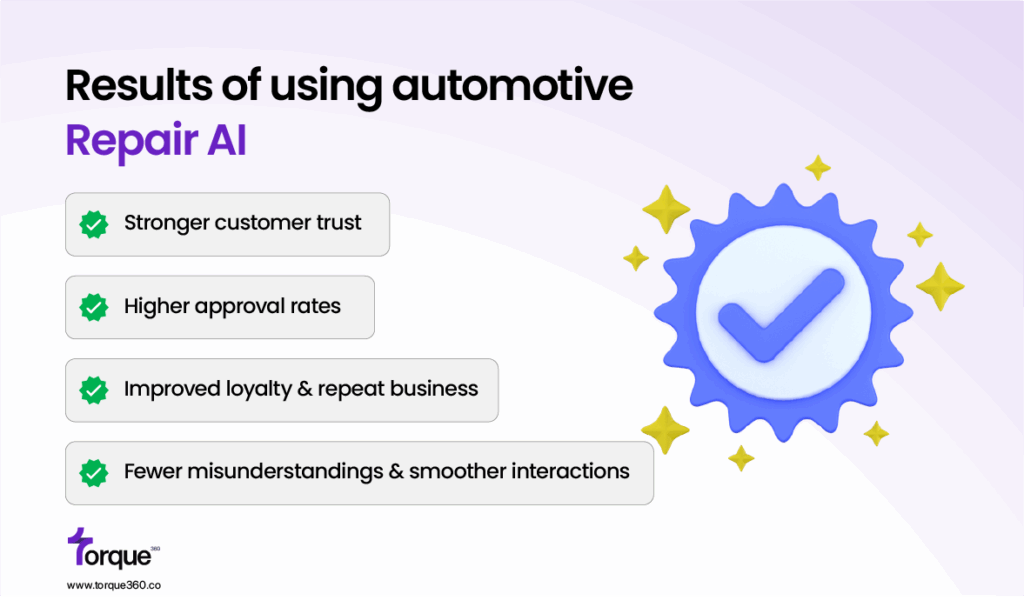
Service advisors can discuss costs, maintenance recommendations, and potential outcomes without sounding technical. Technicians benefit by spending less time repeating themselves or clarifying details. Shops that integrate AI-supported communication see tangible improvements in workflow and customer satisfaction. This contributes to long-term growth and retention in the future auto industry.
Why transparency matters in the AI-supported repair workflow
As more diagnostic and repair decisions rely on data, transparency becomes essential. Customers want to understand how shops create estimates. They also want to know why shops recommend certain repairs.
A survey by Salesforce found that 70% of U.S. car owners are open to using an AI agent. They said it would be helpful if the AI could diagnose and explain their car’s issues in real time. AI-supported systems help standardize explanations, document inspection steps, and maintain consistent communication. This clarity not only builds trust but also protects the shop.
Detailed digital records help support warranty claims. It also reduces disputes and ensures compliance with manufacturer repair procedures. This is especially important when working with ADAS and complex electronics.
Support Through Auto Repair Shop Software with AI
Shops using Torque360 report faster estimating, clearer customer communication, and more predictable scheduling. The features support technicians and advisors without altering familiar workflows. Using Torque360 allows you to be ready for the future of automotive repair industry. You can:
- Reduce manual effort while improving accuracy
- Provide structured, clear customer explanations
- Ensure maintenance follow-ups are timely & consistent
- Maintain technician autonomy while enhancing productivity
These tools help your shop achieve better outcomes without disrupting established processes.
Future Of Automotive Repair Industry
Artificial intelligence in automotive industry is no longer a distant possibility. It is practical, supportive, and already enhancing real shop operations. Implementing AI will help interpret real-time performance data. It will help predict maintenance needs. It can also recommend repairs and schedule service at the right time. This shifts the shop from a reactive role to a proactive partner in vehicle health.
Shops are adopting AI auto repair tools today. These tools help technicians work more efficiently and with greater confidence. They will be better prepared to collaborate with OEM systems and telematics platforms. Service advisors gain structured guidance that supports approval rates. Customers enjoy clear explanations and timely service.
Frequently Asked Questions
1. What exactly does “AI auto repair” mean for a repair shop?
It means using artificial intelligence tools to assist with different tasks. These tasks include diagnostics and repair‑order creation. AI also helps with parts sourcing, inspection communication, and follow‑up scheduling.
2. Will the future of AI in automotive industry replace technicians or service advisors?
No. The goal is not replacement, but enhancement in the future auto industry. AI solutions handle support tasks and data analysis. This allows your team spends more time applying their expertise. Technicians and advisors stay central. AI helps them increase precision and build confidence in their work.
3. How soon can a shop start benefiting from AI solutions for automotive?
Shops can integrate many use cases for the future of automotive repair industry. This requires minimal disruption. It may take weeks to see better efficiency, more approvals, or fewer diagnostic delays.
4. Is auto repair shop software with AI only for large or high‑tech shops?
No. Some advanced implementations need bigger investments. Many AI tools today serve everyday use. They integrate with typical workflows and provide value. The key is selecting solutions that align with how your shop already works.