
An estimate should build trust. Instead, many shops lose it in seconds. The customer stands at the counter. Your service advisor flips between screens. Labor lines look unclear. Parts pricing needs verification. The total changes after tax. The customer hesitates. That moment costs more than time. It affects approvals, cash flow, and long-term loyalty.
In 2026, shop owners can’t rely on spreadsheets or outdated systems. The right auto repair shop estimate software must do more than calculate totals. It must control workflow, protect margins, and improve communication from inspection to invoice.
Shops feel this pressure every day. 31% of automotive repair shops cited technology shortages as their biggest operational challenge. That gap shows up in delayed estimates, pricing errors, and missed approvals. If you’re evaluating new tools this year, here’s exactly what to look for.
1. Real-Time Labor and Parts Accuracy
Estimates fail when pricing is inconsistent. Customers’ question totals. Advisors scramble to adjust lines. Margins shrink without anyone noticing. Strong auto repair estimating software must eliminate guesswork. Before you compare vendors, confirm that the system handles pricing with precision & consistency.
Integrated labor guides and configurable labor rates
A professional auto repair estimate program should integrate labor guides into the estimate. Advisors should not leave the system to check times.
Look for:
- Preloaded labor operations
- Editable labor rates by technician or job type
- Clear separation of billed hours and actual hours
- Flat-rate and custom labor support
This level of control protects your gross profit. It also reduces approval friction because customers see structured, consistent pricing.
Live parts pricing and supplier integration
Manual parts entry leads to errors. A reliable auto estimate software must connect to parts suppliers in real time.
Your system should:
- Pull accurate part numbers
- Display supplier pricing instantly
- Apply markups automatically
- Track availability
Advisors build estimates faster and with confidence. They can do so when parts & labor work together inside vehicle estimating software.
2. Smooth Workflow From Inspection to Repair Order
Estimates should not live in isolation. They must connect to inspections, approvals, and invoicing. Many shops use disconnected tools. That creates duplication and missed details. In 2026, the standard is full workflow integration.
Digital vehicle inspections tied to estimates
Modern vehicle repair estimate software should connect directly to Digital Vehicle Inspections (DVI). Identified issues by techs should convert into estimated line items without retyping.
With a connected system like Torque360’s DVI and Repair Order workflow, shops can:
- Attach photos and videos to estimate lines
- Categorize recommendations by priority
- Send structured approvals to customers
- Reduce miscommunication between techs and advisors
This removes friction and increases approval rates.
One-click conversion to repair orders
A strong car repair estimate program must convert approved estimates into repair orders. No duplicate entry. No rework. No missing line items. When estimated data flows into the repair order automatically, you protect margins. You also reduce administrative time. A well-designed repair estimate software ensures that nothing falls through the cracks.
3. Clear Customer Communication and Digital Approvals
Customers approve clarity, not complexity. In 2026, the best auto shop estimating software does not just generate numbers. It communicates value.

Branded digital estimates with transparent breakdowns
Your estimate should reflect your brand. It should present labor, parts, taxes, and fees in a clear structure.
Look for:
- Clean digital layout
- Mobile-friendly format
- Line-by-line descriptions
- Attached inspection media
When customers understand the work, they approve faster. A structured car repair estimate software reduces phone calls and back-and-forth clarification.
Integrated text and email approvals
Paper signatures slow everything down. A professional auto repair estimator software should allow customers to review & approve digitally.
The right system will:
- Send estimate links via text or email
- Track approval timestamps
- Store digital signatures
- Maintain an audit trail
This level of documentation protects your shop in disputes and speeds up workflow.
4. Margin Protection and Reporting Insights
Estimates drive revenue. If you don’t measure them, you lose control. Many shops track total sales but ignore estimate-level performance.
Built-in profit tracking
A modern auto repair shop estimate software must show parts margin. It should also show labor margin and job profitability before the repair begins.
Look for dashboards that display:
- Parts markup percentages
- Labor gross profit
- Technician efficiency
- Estimate-to-approval ratio
Vehicle estimating software provides these metrics in real time. This way, you make informed pricing decisions.
Estimate approval analytics
You need visibility into what customers decline.
Advanced auto repair estimating software should track:
- Approved vs. declined recommendations
- Average estimate value
- Upsell conversion rates
- Repeat customer behavior
Torque360’s reporting structure connects estimates, repair orders, and invoices. This way, the shop owners see the full financial picture without exporting spreadsheets.
5. Customization and Template Control
No two shops operate the same way. Your car repair estimate software should reflect your workflow. It should not force you into someone else’s template.
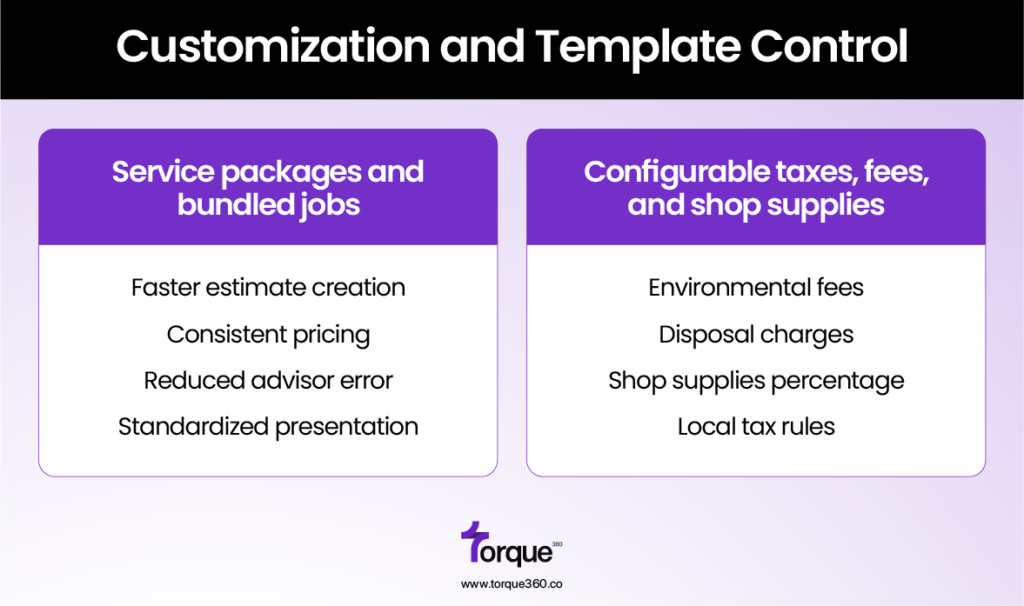
Service packages and bundled jobs
Shops often sell common packages such as brake service or timing belt replacements. Your auto estimate software should allow prebuilt templates.
Benefits include:
- Faster estimate creation
- Consistent pricing
- Reduced advisor error
- Standardized presentation
Template logic inside a professional auto repair estimator software improves speed. It avoids sacrificing accuracy.
Configurable taxes, fees, and shop supplies
Hidden costs often create confusion. A flexible auto shop estimating software must allow you to configure:
- Environmental fees
- Disposal charges
- Shop supplies percentage
- Local tax rules
This ensures compliance and protects margins.
6. Cloud Access, Security, and Scalability
In 2026, on-premise systems limit growth. A modern vehicle repair estimate software must be cloud-based. Advisors, managers, and owners need access from anywhere.
Multi-location visibility
If you operate multiple shops, your repair estimate software should centralize data. It should also allow location-level controls.
Look for:
- Separate labor rates per location
- Central reporting dashboard
- User permission controls
- Role-based access
Scalable auto repair shop estimate software grows with your business.
Data security and backup
Customer data, vehicle history, and pricing structures are sensitive. Your auto repair estimate program must include:
- Encrypted cloud storage
- Automatic backups
- Secure login authentication
- Audit logs
Security builds long-term trust.
7. Integration with the Entire Shop Management System
Standalone tools create silos. The strongest auto repair estimating software integrates with scheduling, inventory, CRM, and invoicing.
Torque360’s platform connects:
- Appointment scheduling
- Digital inspections
- Estimates
- Repair orders
- Inventory management
- Invoicing and payments
When auto repair shop estimate software functions inside a complete shop management ecosystem, you eliminate data duplication. This level of integration also improves technician productivity and service advisor efficiency.
Choosing Software That Supports Growth
Many tools claim to generate estimates. Few support operational growth.
Before you commit, ask:
- Does the system reduce estimated creation time?
- Does it improve approval rates?
- Does it protect margins automatically?
- Does it scale with extra technicians or locations?
In 2026, shop owners need more than a digital calculator. They need structured workflow control, reporting visibility, and connected operations. The right auto repair shop estimate software becomes a revenue engine. It is no longer just an administrative tool.
Build Estimates That Build Trust
Estimates shape customer perception and shop profitability. When they lack clarity or structure, approvals slow, and margins shrink.
Modern auto repair shop estimate software must connect inspections and labor guides. It should also connect supplier pricing, reporting, and digital approvals inside one system. It must reduce friction for advisors and provide transparency for customers.
If your current system has extra steps or hides financial insight, it limits growth. In 2026, choose technology that strengthens your workflow from inspection to invoice. When your estimate process is precise, your revenue becomes predictable.
Frequently Asked Questions
What Is The Difference Between Auto Repair Estimating Software And Shop Management Software?
Auto shop estimating software creates accurate job estimates with labor and parts calculations. Shop management software includes estimates. It also manages scheduling, repair orders, inventory, invoicing, reporting, and customer communication. An integrated platform reduces duplication and improves efficiency.
How Much Does an Auto Repair Shop Estimate Software Cost In 2026?
Pricing varies based on features, user count, and integration depth. Basic estimate-only tools may cost less but lack workflow integration. Comprehensive systems provide higher ROI because they improve approval rates and margin control. It is because it includes inspections, reporting, and digital approvals.
Can I Import Labor Guides Into My Car Repair Estimate Program?
Most modern systems integrate with labor guide databases rather than requiring manual imports. This ensures consistent labor times and faster estimate creation while reducing pricing errors.
Does Vehicle Estimating Software Improve Customer Approval Rates?
Yes. When estimates include clear line items & inspection photos, customers approve the work faster. Structured presentation reduces confusion and builds trust.
Is Cloud-Based Repair Estimate Software Secure For Customer Data?
Reputable platforms use encrypted cloud infrastructure, automated backups, and role-based permissions. Always confirm that the provider follows strong data security standards. Verify encryption, access controls, and backup policies before you migrate your system.