Starting a mobile mechanic business is an exciting venture. According to Mordor Intelligence, the mobile vehicle repair service market is projected to reach around USD 6.51 billion in 2030. It reflects strong demand for on‑site and convenience‑focused automotive services.
It offers flexibility, independence, and a growing customer base. However, before you begin offering services, it’s essential to obtain a mobile mechanic business license. This step ensures that your business is legal, credible, and ready for long-term success.
In this guide, we’ll show you how to obtain your business license and why it’s important. We’ll break down each step clearly so you can take action and get started the right way.
Why You Need a Mobile Mechanic Business License
Operating without the right license puts your business at risk. It can lead to fines, legal trouble, and lost opportunities. A business license for mobile mechanic is essential for several reasons:
Legal Compliance: Without a license, you might face legal consequences or fines. A license ensures you follow the regulations in your area.
Customer Trust: A licensed mechanic is trusted more by customers. They know you’ve met local standards and are protected by insurance.
Opportunities for Growth: With a valid business license, you can take on larger contracts, work with insurance companies, and grow your client base.
A business license shows customers you’re legitimate. It helps protect your business and ensures you meet industry standards. If you’re still wondering whether this work is worth pursuing, check out why mobile mechanic is a viable career to understand the growth potential and real‑world demand.
Once you’re licensed, using a dedicated mobile mechanic software helps you manage scheduling, estimates, and invoicing while working on the go.
What Are the Mobile Mechanic Licence Requirements?
To operate legally as a licensed mobile mechanic, there are certain requirements you need to meet. While these can vary by location, here are the main things you’ll need:
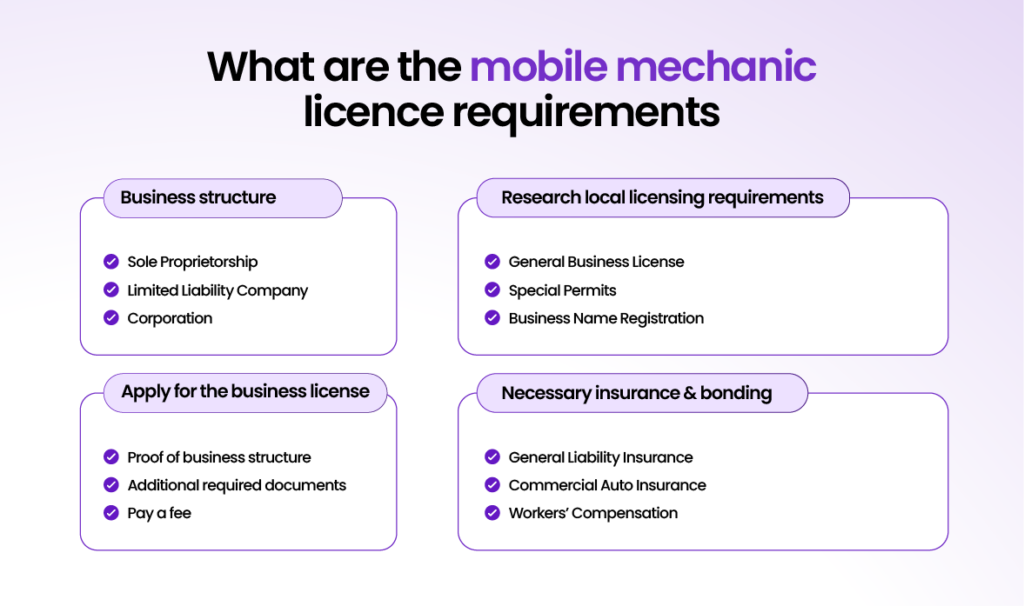
1. Choose your business structure
First, decide on your business structure. This choice affects taxes, liability, and the amount of paperwork you need to file. Common structures include:
- Sole Proprietorship: You are the sole owner. You handle all decisions, but your personal assets aren’t protected from business debts.
- Limited Liability Company (LLC): This structure separates your personal and business finances. It offers liability protection and tax benefits.
- Corporation: A corporation offers strong personal liability protection and can raise capital more easily, but it comes with more paperwork.
Choose a structure that fits your needs. An LLC is often a good option for small businesses due to its protection and flexibility. If you’re just starting, getting your business set up correctly
is essential for long-term success.
2. Research local licensing requirements
Mobile mechanic licence requirements vary by state and local area. Some areas require you to pass exams or obtain specific certifications. Research local regulations by checking with government websites or local business associations. You’ll want to confirm:
- General Business License: Required by most areas for any type of business.
- Special Permits: Some regions require special permits for services like emissions testing or handling hazardous materials.
- Business Name Registration: If you’re using a name different from your own, you’ll need to register it.
Look up the exact requirements for your region to ensure you’re compliant.
3. Apply for the business license
Once you know the requirements, it’s time to apply for your mobile mechanic business license. You’ll typically need to:
Fill out an application form with basic business information.
- Submit proof of your business structure (e.g., Articles of Incorporation if you’ve set up an LLC).
- Provide any additional required documents, like proof of identity and insurance.
- Pay a fee, which can range from a few dollars to several hundred, depending on your location.
Be sure to gather all the necessary documents before applying. A complete application helps avoid delays.
4. Obtain necessary insurance and bonding
As a mobile mechanic, insurance protects both you and your customers. Some common types of insurance you’ll need include:
- General Liability Insurance: This covers damage to property or injury to people caused by your work.
- Commercial Auto Insurance: Since your vehicle is crucial to your business, this insurance protects your car and tools.
- Workers’ Compensation: If you hire employees, this insurance covers their medical expenses if they’re injured at work.
In some locations, you may also need bonding. A bond ensures your customers are compensated if you fail to fulfill your contract. It offers protection and builds trust.
5. Pay fees and finalize registration
After you’ve completed the paperwork and provided all necessary documentation, you’ll pay any fees associated with the license. Fees vary depending on your location and business structure. Once the payment is processed, your business license will be issued. This can take anywhere from a few days to a few weeks.
How Being a Licensed Mobile Mechanic Helps Your Business
Securing a mobile mechanic business license isn’t just about compliance. It’s about building a strong foundation for your business. Here’s how being licensed benefits you:
1. Builds customer trust
Customers prefer working with licensed professionals. A license shows you’ve met local standards and regulations. It gives customers confidence that your business is legitimate and trustworthy. This trust is essential for building a solid client base.
2. Ensures legal compliance
By following local regulations, you avoid fines or legal issues. A business license protects you from the risks of running an unlicensed business. It also ensures you are operating within the law, which is critical for long-term success.
3. Opens up business opportunities
With a business license, you can take on larger projects and work with insurance companies. Many clients prefer to hire licensed professionals because it assures them that the work will be done correctly and safely.
4. Protects you & your customers
Insurance and bonding are essential for protecting your business and your clients. If something goes wrong on the job, insurance helps cover costs. Bonding guarantees that your customers are compensated if you fail to meet your contractual obligations.
According to Lincoln Tech, the BLS projects more than 67,000 job openings each year for automotive service technicians and mechanics through 2033. It reflects the growing demand for vehicle repair and maintenance services that licensed mobile mechanics can serve.
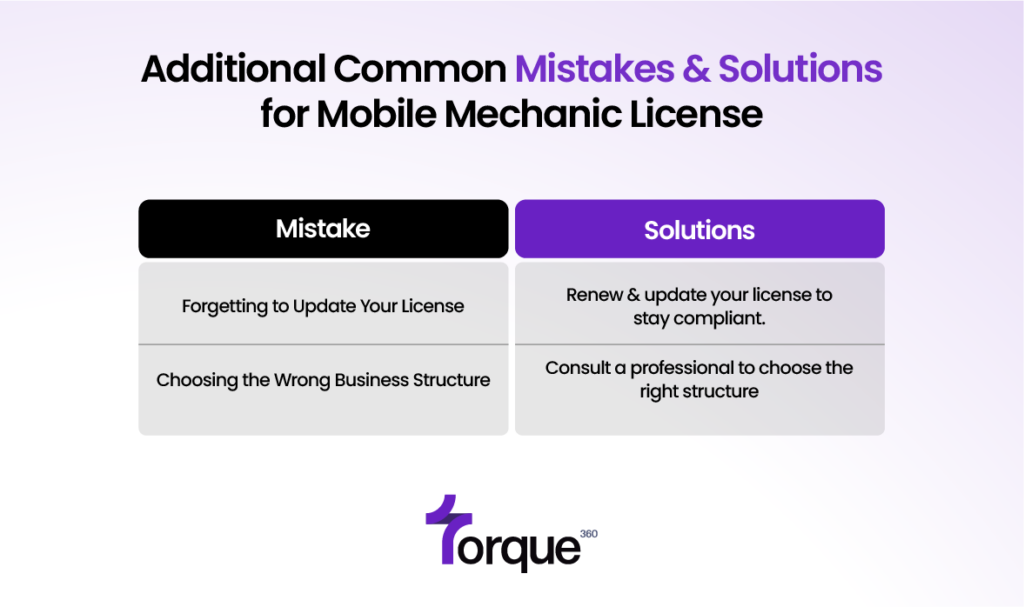
Common Mistakes to Avoid When Getting a Mobile Mechanic License
The process of obtaining a mobile mechanic license is fairly straightforward, but there are common mistakes to avoid:
1. Not researching local requirements thoroughly
It’s crucial to fully understand the local requirements for your area. Failing to do so can delay your license application or lead to fines. Researching early ensures you meet all the necessary criteria.
2. Skipping insurance and bonding
Insurance and bonding may seem like unnecessary costs, but they are vital for protecting your business. Without them, you risk losing everything in the event of an accident or legal issue.
3. Not keeping proper records
Make sure to keep copies of all your documents, including your license, insurance policies, and payment receipts. These records are important for tax purposes and future business operations.
Start Your Mobile Mechanic Business with Confidence
Now that you understand the process, it’s time to take action. Start by researching the mobile mechanic licence requirements in your area. Gather your documents and apply for your license. Make sure you have the right insurance and bonding in place. Once you’ve completed these steps, you’ll be ready to operate legally and confidently.
Obtaining a mobile mechanic business license is a critical step in starting your business. It ensures that you’re legally compliant, protected, and trusted by your customers. With the right license, you’ll be able to expand your business, take on larger projects, and build long-lasting relationships with clients.
So, take the next step today by gathering your paperwork, researching local requirements, and applying for your business license for mobile mechanics. With everything in place, you can hit the road with confidence, knowing you’re operating a legitimate and professional mobile mechanic business.
Frequently Asked Questions
Do I need a business license to operate as a mobile mechanic?
Yes. Most states require a business license for you to operate a legally licensed mobile mechanic. The exact requirement can vary by location, so you should check with your local licensing office or business department to confirm what is required where you plan to work. These licenses help you stay compliant and protect you from fines or penalties for operating without authorization.
What permits or certifications do mobile mechanics typically need?
The permits or certifications needed depend on where you operate and what services you offer. Generally, you’ll need a mobile mechanic business license or repair dealer permit to perform auto repair services legally. In some locations, you may also need additional permits related to waste disposal or handling hazardous materials like oil. While certifications like ASE (Automotive Service Excellence) are not always required, they can enhance your credibility and help build trust with customers. Be sure to check local regulations to ensure you meet all the requirements for your area.
Does every state require a mobile mechanic to be licensed?
No. Licensing requirements vary by state. Some states may not require a specific mobile mechanic license, while others require a repair business license to perform vehicle maintenance for pay. Always check local regulations before you start, as failure to have the right license could result in fines or business restrictions.
Can I operate in multiple locations with one mobile mechanic license?
If you plan to operate across different states, you may need to register in each jurisdiction where you provide services. Licensing rules often apply locally, so a single business license may not be valid in every area you operate. Contact local business authorities to confirm whether you need additional registrations or permits.
How much does it cost to get a business license for mobile mechanics?
The cost varies widely based on your region and the type of license you need. Some local business licenses can be relatively low-cost, while additional permits or special repair business licenses may carry higher fees. You should budget for licensing fees, insurance costs, and any other permit charges in your area before you start.