If you run an auto repair business, you are likely familiar with Basic Inspection of Terminals (BIT) inspections. You probably also understand why they matter. These inspections can feel like a complex hurdle.
Missing one detail can lead to failed vehicles, fines, downtime, and unhappy customers. However, understanding the process thoroughly can turn this challenge into an opportunity. Your shop can become a trusted resource for fleets and commercial drivers needing expert BIT preparation.
This guide covers everything auto repair shops need to know about BIT inspections. From the basics and detailed checklists to preparation tips and technology solutions.
What is a BIT Inspection?
BIT is a mandatory safety inspection for Commercial Motor Vehicles (CMV) operating in California. The California Highway Patrol (CHP) conducts these inspections to ensure vehicles meet state safety standards. The goal is to prevent accidents and reduce the number of unsafe vehicles on the road.
Unlike Federal Department of Transportation (DOT) inspections, BIT inspections happen more frequently. Most commercial vehicles weighing over 26,000 pounds must undergo a 90-day bit inspection.
Auto repair shops play a critical role in this process. You do more than fix vehicles. You help operators pass BIT inspections, avoid penalties, and keep their businesses running smoothly.
Who Needs to Comply With BIT Inspections
Knowing which vehicles and operators must comply is essential for your shop’s success.
1. Covered vehicles
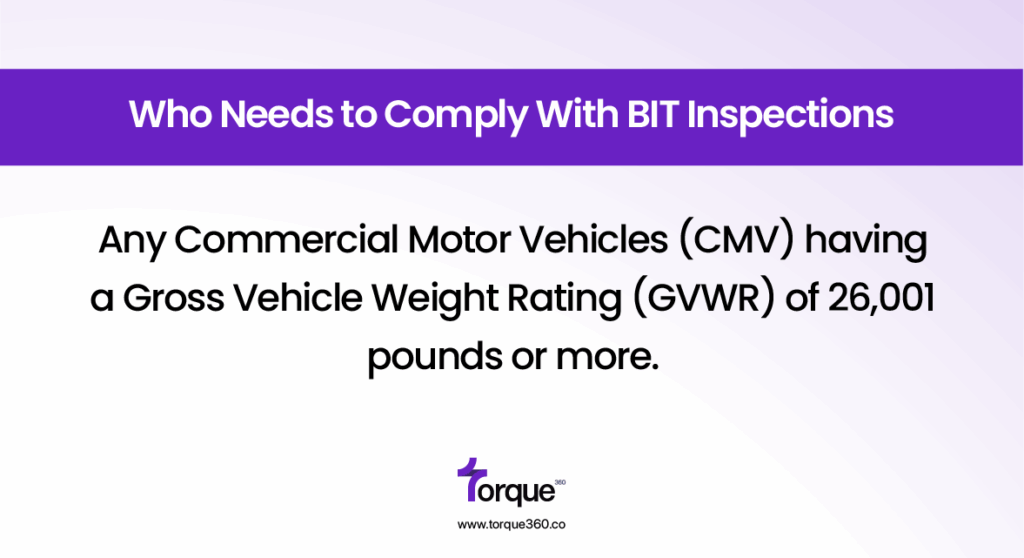
Such vehicles must comply with BIT inspections. This includes large trucks, tractor-trailers, buses, and some specialized heavy equipment used for commercial hauling. Vehicles that regularly operate in California, even if they cross state borders, fall under this rule.
2. Operators
Compliance applies to trucking companies, fleet operators, owner-operators, and leasing companies. It covers anyone who manages or operates qualifying vehicles within California. Even short-haul or regional operators must meet BIT requirements if their vehicles meet the weight criteria.
3. Exemptions
Some vehicles are exempt. These include personal-use vehicles, limited-use farm vehicles, and certain government or emergency vehicles. These exemptions are narrow, so it is important to review specific cases carefully.
4. Your role
Even if your shop focuses on light-duty vehicles, many clients with commercial fleets need regular BIT inspections. Understanding compliance helps you identify and serve these clients better. You can offer specialized maintenance and inspection preparation services.
By knowing who must comply, your shop can focus marketing efforts on the right customers. By following auto repair shop marketing, you can also target training and service efforts more effectively. This approach maximizes your impact in the commercial auto repair market.
When and How Often are BIT Inspections Required
BIT inspections follow a strict schedule. According to Scopelitis, since January 1, 2025, California requires all qualifying commercial vehicles to have a BIT inspection every 90 days.
Failing an inspection can result in heavy fines, operational shutdowns, or suspension of trucking licenses. For your shop, tracking these inspection schedules is crucial. Maintaining accurate maintenance logs and calendars helps clients stay compliant and avoid costly penalties.
8 Systems & Components that BIT Inspections Cover
BIT inspections focus on ensuring that commercial vehicles meet strict safety standards before they hit the road. Inspectors check many systems and components to ensure everything works properly. They also verify that nothing poses a risk to drivers or others.
Understanding these key areas helps your shop find common failure points and prepare vehicles thoroughly. Inspectors typically review:
1. Braking systems
They verify that the service brakes work correctly. They also check the air brake system for leaks or faults if the vehicle is equipped with one. Parking brakes are also tested to ensure they hold the vehicle securely.
2. Steering systems
Inspectors look for excessive play or damage in the steering system. They check for fluid leaks and make sure the steering responds properly to driver input.
3. Tires and wheels
Tires must have enough tread depth and show no visible damage, like bulges or cuts. Inspectors check tire pressure and examine wheels and rims for cracks or bends that could compromise safety.
4. Lighting and reflectors
All vehicle lights, including headlights, taillights, brake lights, and turn signals, must work properly. Reflectors should be clean and intact for visibility at night or in poor weather.
5. Windshield and mirrors
Inspectors check for cracks or damage that could impair the driver’s vision. Mirrors must be properly adjusted and securely mounted to provide clear views around the vehicle.
6. Exhaust systems
The exhaust must be free of leaks and securely mounted. Inspectors also look for excessive smoke or emissions that violate environmental rules.
7. Safety equipment
Vehicles need functioning fire extinguishers, emergency triangles, and other safety kits. Inspectors verify these are present and in good condition.
8. Chassis and frame
The vehicle’s frame and chassis must be free of rust, cracks, or structural damage. Any weakness here can compromise the entire vehicle’s integrity.
Thorough inspections of these areas help keep commercial vehicles safe and compliant. Your shop can support clients by performing pre-inspections and repairs on all these systems.
5 Ways for Auto Shops to Prepare for BIT Inspections
Preparation is key to consistently passing BIT inspections. It also helps your shop build a strong reputation as a reliable service provider. With the right approach, you can reduce last-minute fixes and help clients avoid costly penalties.
1. Create internal checklists
Develop a BIT inspection checklist that closely matches the official BIT inspection criteria. This ensures your team knows exactly what to check during pre-inspections and can catch issues early.
2. Train your technicians
Regularly train your technicians on BIT program requirements and inspection procedures. Keeping your staff updated on the latest regulations improves repair quality. It also helps them spot common defects before official inspections.
3. Keep detailed records
Maintain thorough records of all repairs, maintenance, and pre-inspection checks. Detailed documentation tracks vehicle history, proves compliance, and speeds up inspections by providing clear evidence of care.
4. Use technology for tracking
Use technology and tools to schedule and monitor inspections efficiently. Automated alerts and compliance tracking reduce missed inspections and help manage multiple client vehicles seamlessly.
5. Educate your clients
Take time to educate your clients about the importance of regular maintenance and inspection readiness. When clients understand how proactive care prevents failures, they trust your shop as a valuable partner. This trust helps keep their fleets road-ready.
By managing these steps proactively, your shop reduces inspection failures and client downtime. This approach also builds lasting customer trust in the commercial auto repair market.
How BIT Inspections Affect Your Business Operations
Understanding the broader impact of BIT inspections helps your auto repair shop make smarter decisions and improve long-term success. These inspections affect more than just vehicle safety. They also influence your shop’s financial health, customer relationships, and industry reputation.
1. Avoid costly fines and downtime
Failing a BIT inspection can result in significant fines from the CHP. These penalties often reach thousands of dollars per violation. In addition to fines, failed inspections cause vehicle downtime, disrupting your clients’ operations. This downtime may lead to lost revenue for your clients and fewer repeat jobs for your shop.
2. Reduce insurance risks and costs
Maintaining compliance with BIT standards lowers the risk of accidents caused by mechanical failures. This safety record can help your clients secure lower insurance premiums. For your shop, consistently preparing vehicles to pass inspections shows a commitment to quality. This approach attracts clients who value risk management and asset protection.
3. Build customer trust and loyalty
Becoming a trusted BIT inspection preparation expert positions your shop as a key partner for commercial clients. Helping fleets avoid costly penalties and downtime makes customers see your shop as reliable and essential. This trust often leads to more referrals and long-term contracts, fueling steady business growth.
4. Enhance your shop’s reputation
Consistently helping clients pass BIT inspections demonstrates your commitment to safety and quality workmanship. A strong reputation in the commercial auto repair market helps your shop stand out from competitors. It also opens doors to new opportunities with larger fleets or specialized clients.
Instead of seeing BIT inspections as obstacles, view them as opportunities to showcase your expertise. This approach can help you grow your client base and increase your shop’s value in a competitive market.
Using Auto Repair Software for BIT Inspections
Modern technology offers powerful tools to simplify and improve BIT inspection management. These solutions help auto repair shops stay organized and maintain compliance with ease.
1. Digital checklists
Replace traditional paper forms with digital checklists to reduce human error. This ensures every critical inspection item gets reviewed consistently. These checklists can be customized to match BIT inspection criteria. This allows technicians to follow a clear, step-by-step process during digital vehicle inspection.
2. Automated scheduling and reminders
Use tools that track upcoming inspections and send timely notifications to staff and clients. This helps prevent missed deadlines, ensures no vehicle is overlooked, and keeps inspections on schedule for smooth operations.
3. Centralized record-keeping systems
Store all inspection histories, repair logs, and compliance documents in one secure, accessible location. This organization speeds up the inspection process. It also provides clear evidence of maintenance and repairs, which can be invaluable during audits or dispute resolutions.
4. Real-time reporting and analytics
Gain insights into trends and potential risks through data analysis. For example, identifying recurring failures or common defects early enables proactive maintenance. This reduces the chance of inspection failures and improves overall fleet safety and compliance.
Key Differences Between BIT and DOT Inspections
So, how are BIT inspections different from DOT inspections?
The main difference is the frequency. BIT inspections occur every 3 months, while DOT inspections are typically done once a year.
BIT is a California-specific program enforced by the CHP. DOT inspections are a federal requirement that applies nationwide. Although some states may have their own rules, many follow the DOT standards.
Both programs focus on the same essential safety components. These include brakes, lights, tires, and steering systems. Both inspections must be performed by certified technicians. They aim to ensure that vehicles are safe and road-ready.
In addition to inspecting vehicle components, both CHP (for BIT) and DOT officers may review driver records. They also check maintenance logs and repair histories to ensure full compliance.

Simplifying BIT Inspections for Auto Repair Businesses
BIT inspections do not have to be a constant struggle for your auto repair business. With the right knowledge, preparation, and technology, your shop can become a trusted partner for commercial fleets.
At Torque360, we offer powerful software solutions that simplify BIT inspection management. Our platform helps you track schedules, organize inspections, maintain compliance, and communicate with clients effortlessly.
Frequently Asked Questions
Do only large fleets need to undergo BIT inspections?
Any commercial vehicle that meets California’s weight and operational criteria must comply with BIT inspections. This applies regardless of fleet size. Owner-operators and small trucking companies must follow these regulations just like larger fleets.
Can vehicles pass BIT inspections even if they have minor defects?
BIT inspectors require full compliance with safety standards. Even small defects or safety issues can cause a failed inspection. This can lead to fines and downtime until repairs are complete.
Do auto repair shops assist with BIT inspections?
Repair shops play a critical role in preparing vehicles for BIT inspections. Conducting pre-inspection checks, performing necessary repairs, and advising clients on compliance help fleets avoid failures and penalties.
Are BIT inspections the same as federal DOT inspections?
BIT inspections are specific to California and occur more frequently than federal DOT inspections. They typically happen every 90 days and follow different criteria and enforcement protocols. Understanding these differences is essential for compliance.