
Tire shops have workflow needs that general auto repair software doesn’t fully address. Automatic DOT number registration with manufacturers (a federal compliance requirement), tire fitment data across vehicle/brand/model/year combinations, TPMS reset and relearn procedures, wholesale/B2B inventory across multiple suppliers, and staggered fitment handling for performance vehicles. The shops that try to run these workflows on general auto repair platforms either work around the gaps with manual processes or buy add-on modules.
The short answer: for dedicated tire shops or tire-heavy combo operations, specialty platforms like TireShop (FreedomSoft), Tire Power (TCS Technologies), TireMaster, FastTrak Tire Shop Software, or Tire Base are built around the tire workflow.
For combo shops doing 30-60% tire work alongside general repair, general auto repair platforms with tire add-on modules (Tekmetric’s Tire Suite at $39/mo extra or built-in tire features in Shopmonkey and AutoLeap) handle the workflow at a lower cost than dedicated tire platforms.
The wrong choice for either is using general repair software without tire-specific capabilities. You’ll end up doing DOT registration manually, looking up fitment in separate browser tabs, and losing money on tire-specific workflows the software isn’t built to support.
Why Tire Shops Need Different Software (Or a Tire Module)
The workflow differences that matter:
Federal compliance pressure
Tire registration with manufacturers is required under federal regulation (49 CFR § 574). Manufacturers need accurate buyer records to issue recall notifications. Tire shops that don’t register tires correctly face compliance risk and customer safety liability. Manual DOT registration is error-prone and time-consuming.
Software with Tiremetrix or similar integration automates this. Tekmetric specifically markets the workflow: “Automatically register DOT numbers with tire manufacturers to ensure recall information is sent directly to customers.”
Inventory complexity
General repair shops carry maybe 60-150 SKUs. Tire shops easily carry 400-2,000+ SKUs across multiple sizes, brands, models, speed ratings, load indexes, and seasonal categories. Tire inventory management software designed for general repair often handles this poorly. Slow searches, lack of size-based filtering, and no automated alerts when sizes that fit common vehicles run low.
Fitment data dependency
Every tire sold needs verification against vehicle fitment specifications. A 225/45R17 tire that fits one vehicle won’t fit another. Selling the wrong tire creates customer returns, lost margin, and potential safety issues. Tire-specific software integrates fitment data (Tire Guide, Fitment Group) so the system flags incorrect fitments before sale.
TPMS service workflow
Tire pressure monitoring systems require specific procedures for reset and relearn after tire service. Each manufacturer has different procedures, sensor types, and battery life patterns. Software with TPMS data (TPMS Manager, Tiremetrix TPMS module) provides per-vehicle procedures directly in the workflow.
Wholesale and B2B considerations
Many tire shops handle wholesale business alongside retail, selling to other shops, fleet customers, or auto dealerships. The accounting, pricing, and order workflow for B2B is fundamentally different from retail counter sales. Tire-specific platforms typically include wholesale features; general repair platforms typically don’t.
Quote presentation
Tire shop customers shop on price more than general repair customers. The “Good-Better-Best” tire quote presentation is the industry standard. The customer needs to see 3 options at different price points with margin captured at each. General repair software typically doesn’t have this quoting structure built in.
If your shop does 40%+ of revenue from tires, these workflow needs are not optional. The cost of working around them (manual DOT registration software, separate fitment lookups, missed TPMS procedures) typically exceeds the cost of tire-appropriate software.
The 7 Tire-Specific Features That Matter Most
1. DOT registration automation
What it does: When a tire is sold, the platform automatically transmits the DOT number, customer information, and tire details to the appropriate manufacturer’s registration system. Most platforms use Tiremetrix (the industry standard) as the underlying integration.
Why it matters: Federal compliance, customer safety (recall notification), and tech/advisor time savings. A high-volume tire shop selling 500+ tires per month saves 30-50 minutes per day on what would otherwise be manual entry.
What to look for: Integration with Tiremetrix Tire Registration Plus, real-time DOT validation, automatic transmission to the manufacturer, and recall flagging during the sale.
2. Tire fitment data
What it does: Looks up which tires fit a specific vehicle based on year/make/model. Some platforms include Plus Sizing data (alternative tire sizes that work for performance or appearance) and OEM tire data.
Why it matters: Prevents fitment errors that cause returns, customer complaints, and potential safety liability. Speeds up quoting since advisors don’t need to search external databases.
What to look for: Integration with Tire Guide, Fitment Group, or equivalent. Real-time updates as new vehicles come to market. Plus-sizing options for performance vehicles.
3. TPMS workflow integration
What it does: Provides per-vehicle TPMS reset and relearn procedures, sensor part numbers, and battery life data directly in the RO workflow.
Why it matters: TPMS service is increasingly part of tire service. Customers expect their TPMS to work after a tire change. Software with built-in procedures prevents technician guesswork and reduces comebacks.
What to look for: TPMS Manager integration, Tiremetrix TPMS data, or equivalent. Vehicle-specific procedures in the workflow, not just general guidance.
4. Tire-specific inventory tracking
What it does: Tracks inventory by tire-specific attributes: size, brand, model, speed rating, load index, season (all-season/winter/summer), and DOT date code.
Why it matters: Tire shops carry 400+ SKUs with complex categorization. General inventory software treats all SKUs the same. Tire-specific inventory enables searching by size, low-stock alerts by fitment, age tracking (DOT date for inventory rotation), and seasonal management.
What to look for: multi-attribute search (size + speed + brand), DOT date tracking for inventory rotation, and automatic restock alerts based on common fitments your customer base needs.
5. Wholesale/B2B capabilities
What it does: Enables selling to other shops, fleets, or dealers with appropriate pricing tiers, account terms, batch invoicing, and delivery routing.
Why it matters: Many tire shops have a wholesale component generating 20-40% of revenue. Wholesale workflow is operationally different from retail counter sales. Software without B2B features forces shops to run wholesale through spreadsheets or separate systems.
What to look for: customer-tier pricing (retail vs. wholesale rates), batch invoicing for fleet customers, account balance tracking, and a B2B online ordering portal (the TireShop B2B feature is an example).
6. Good-Better-Best quote presentation
What it does: Structures tire quotes as three options at different price points, typically a value tire, a mid-tier tire, and a premium tire, so customers see the range and choose accordingly.
Why it matters: Tire customers expect price options. Single-option quotes lose customers to competitors. The Good-Better-Best format captures more sales by giving customers a choice within your inventory rather than driving them to shop elsewhere.
What to look for: quick quote generation with multiple-tier options, automatic margin calculation per tier, text/email delivery to customer, and road hazard warranty as an optional add-on per quote.
7. Staggered fitment handling
What it does: Handles vehicles with different tire sizes front and rear (common on performance vehicles, BMW, Mercedes, Porsche, etc.). The system quotes 2 fronts + 2 rears as separate line items with appropriate fitment.
Why it matters: Staggered fitments are common on premium vehicles. Software that treats all 4 tires as the same SKU produces incorrect quotes, ordering errors, and customer frustration on these vehicles.
What to look for: Staggered fitment recognition by VIN, separate front/rear tire selection in the quote workflow, appropriate margin calculation across mixed sizes.
The Two Tiers of Tire Shop Management Software
Tier 1: Dedicated Tire Shop Platforms
Built specifically for tire shops, with the 7 tire-specific features as core capabilities (not add-ons):
TireShop by FreedomSoft
Comprehensive tire shop platform with Tire Registration Plus integration, built-in MOTOR data for labor guides, PartsTech for parts ordering, AutoFlow for DVI, and a fitment catalog via Fitment Group. Strong wholesale (TIRESHOP Wholesale, B2B) capabilities.
Tire Power by TCS Technologies
Established tire industry platform with DOT validation, Tiremetrix integration for registration, TPMS Manager, Quick Inventory, and contract pricing tools. Strong for Goodyear dealers via Tire-HQ integration. Real-time inventory across locations.
TireMaster
Multi-location tire and auto management with CarFax integration, fitment guides, DOT registration, TPMS support, and comprehensive vehicle and customer history. Digital inspections built in.
FastTrak Tire Shop Software
Cloud-based with tiered pricing matrices, staggered fitment quotes, and customer-facing tire information on invoices (speed rating, load index, mileage warranty, and DOT serial numbers).
Tire Base
Cloud-based tire management at $135/month. Inventory tracking, customer relationship management, purchasing workflows, smooth supplier ordering, DVI features.
These platforms are purpose-built for tire shops. Pricing tends to be quote-only for established platforms (Tire Power, TireMaster) or in the $100-$250/month range for the cloud-native options (Tire Base, FastTrak). Setup complexity is higher than general repair software because the systems are deeper.
Tier 2: General Repair Software with Tire Add-Ons
General auto repair platforms with optional tire capability for combo shops:
Tekmetric + Tire Suite: Tekmetric’s optional Tire Suite enables electronic DOT registration via Tiremetrix and data within the platform. Available as an opt-in add-on with month-to-month flexibility.
Shopmonkey: Built-in tire capabilities within standard plans for tire-heavy auto repair workflows. No separate tire module pricing.
AutoLeap: Tire shop capabilities marketed alongside general repair, with markup matrices and reporting for tire sales.
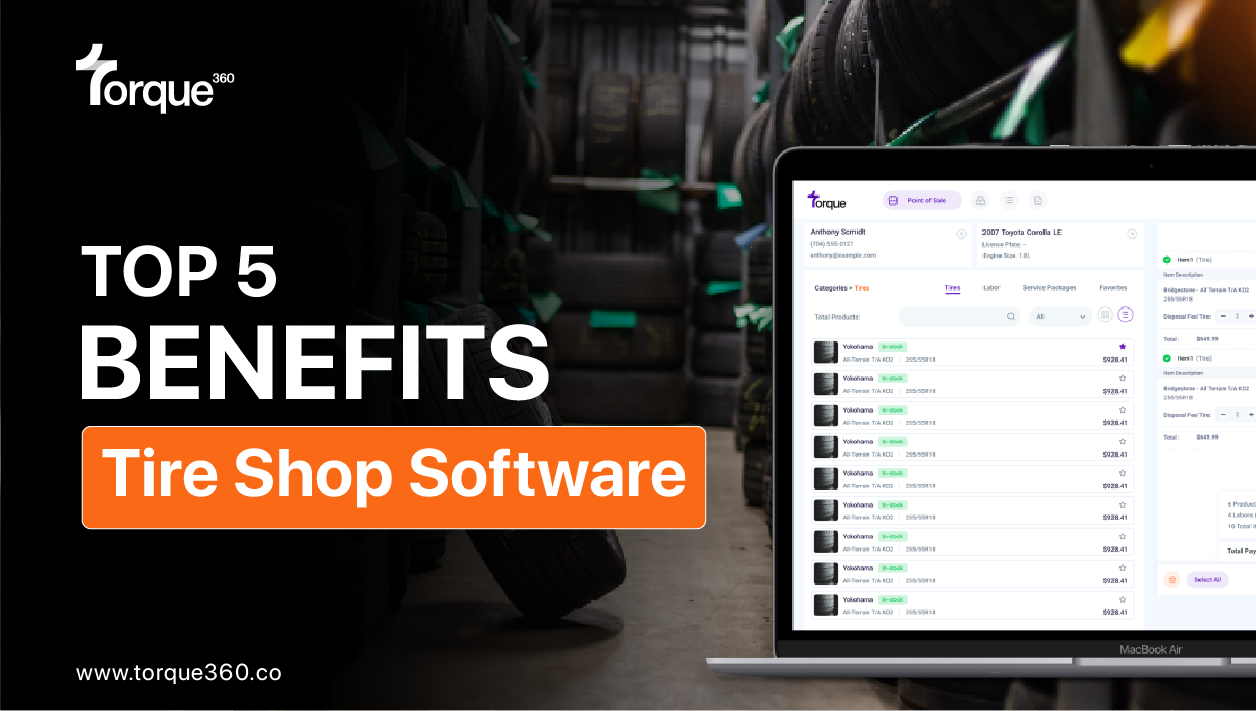
Torque360: Built-in tire shop management with inventory, tire fitment software, and quoting workflow within standard plans.
These platforms work for combo shops doing 30-60% tires alongside general repair. They typically don’t have the full wholesale/B2B depth of dedicated tire platforms but cover the retail tire workflow adequately.
Pure Tire Specialists vs General Repair with Tire Modules
The decision tree:
Choose dedicated tire shop software (Tier 1) if:
- 70%+ of your revenue comes from tires
- You have significant wholesale/B2B business (20%+ of revenue)
- You’re a multi-location tire chain
- You’re a Goodyear, Bridgestone, or other manufacturer-affiliated dealer needing specific integrations
- You handle 500+ tires per month in inventory turnover
Choose general repair with tire add-on (Tier 2) if:
- You’re a combo shop doing both tires and general repair
- Tire revenue is 30-60% of total
- Single-location operation
- Wholesale is minor or absent
- You value an integrated workflow across tire and non-tire repair
Choose general repair software without tire-specific features (Tier 3, basic) if
- Tire work is less than 20% of revenue
- You’re primarily selling tires as part of complete service tickets (e.g., tires + alignment + brakes)
- Volume is low enough that manual DOT registration is workable
- Budget is the primary constraint
Many tire shops overspend on dedicated tire platforms when general repair software with a tire add-on would have served them better. Many combo shops underspend on basic general repair software when they actually need the tire add-on. Match the tier to your actual revenue mix.
When General Repair Software Works for Tire Shops
For combo shops, this honest assessment matters: not every tire shop needs Tier 1 dedicated tire software.
General repair software with tire add-ons works well when:
- Tires are part of a fuller service offering: Customers come in for alignment, brakes, suspension, and tires. The tire portion is one workflow within a larger service ticket.
- Retail-only operation: No wholesale, no fleet B2B, no manufacturer-direct programs.
- Single location: Multi-location inventory complexity is where Tier 1 platforms earn their cost.
- Standard fitments dominate: If you primarily service mainstream vehicles (sedans, SUVs, light trucks) with non-staggered fitments, the workflow is simpler.
- DOT registration via simple integration is enough: You don’t need the deep recall management or compliance features Tier 1 provides.
In these cases, Tekmetric + Tire Suite ($238/mo combined), Shopmonkey, AutoLeap, or Torque360 with built-in tire features cover the workflow at a meaningfully lower cost than tier 1 specialists. The savings ($100-$200/month vs. Tier 1) compound to $1,200-$2,400/year, real money for a combo shop.
Where general repair software falls short for tire shops:
- Pure tire specialists doing 70%+ tire revenue: The depth of inventory management, fitment data, and wholesale capabilities matters more at this concentration.
- Multi-location operations with shared inventory: Tier 1 platforms handle cross-location inventory better.
- Wholesale/B2B operations: Tier 2 platforms typically don’t have the B2B portal, fleet account management, or batch invoicing that Tier 1 provides.
- Manufacturer-affiliated dealers: Tier 1 platforms have direct integrations with Goodyear (Tire-HQ), Bridgestone, and other manufacturer programs.
Honestly evaluate your revenue mix and operational complexity before defaulting to either Tier 1 or Tier 2.
Pricing Reality for Tire Shop Software
Verified pricing ranges based on publicly available information:
Dedicated tire shop platforms (Tier 1):
- Tire Base: $135/month (cloud-based, mid-tier)
- FastTrak Tire Shop: quote-only (typically $200-$400/month based on shop size)
- TireMaster: quote-only (varies by configuration)
- Tire Power by TCS: quote-only (typically $300-$600/month for established multi-location)
- TireShop (FreedomSoft): quote-only
General repair with tire add-ons (Tier 2):
- Tekmetric Start + Tire Suite: $199 + $39 = $238/month
- Shopmonkey Basic Monkey: $199/month (tire features included)
- AutoLeap entry: $179-$199/month
- Torque360 mid-tier: $89.99-$299.99/month depending on configuration
Additional integration costs to budget for:
- Tiremetrix Tire Registration Plus (often bundled with Tier 1 platforms, sometimes additional)
- TPMS Manager subscription (varies)
- Mitchell 1 ProDemand or ALLDATA for OEM repair information ($40-$200/month)
- Wholesale integration (Goodyear Tire-HQ, Bridgestone connections, often bundled with Tier 1)
Total monthly cost for a typical tire shop: $250-$650/month depending on tier choice, integrations, and add-ons. The cheapest path that delivers full tire workflow capability is typically Tekmetric + Tire Suite at $238/month for combo shops, or Tire Base at $135/month for budget-conscious single-location tire specialists.
How to Evaluate Tire Shop Software (5-Test Framework)
Before committing to any platform, test these specific workflows:
Test 1: Complete DOT registration workflow
Walk through selling 4 tires to a fictional customer. Verify that the DOT registration happens automatically. Check that you receive confirmation that the registration was transmitted. Verify that the customer record correctly stores the registration data.
Test 2: Quick fitment lookup
Pick a popular vehicle (Honda CR-V, Toyota Camry, F-150). Without leaving the platform, verify you can pull up all OEM-fitment tire options plus size alternatives within 30 seconds. If you need to leave the platform for a separate Tire Guide lookup, the integration is shallow.
Test 3: Staggered fitment vehicle
Pick a performance vehicle with staggered fitment (BMW M3, Porsche 911, Mercedes E550). Verify the platform recognizes the front/rear size difference and quotes correctly. If the system tries to apply the same-tire pricing to all four, the platform isn’t built for performance work.
Test 4: Good-Better-Best quote in under 90 seconds
Generate a 3-tier tire quote (budget, mid-range, premium) for a customer’s vehicle. Time it. The quote should be ready to text or email to the customer within 90 seconds of starting. Slower than that, the workflow is friction-heavy.
Test 5: Inventory aging check
Pull up a tire SKU. Verify you can see when the inventory was received and the DOT date code, and identify inventory approaching age limits (manufacturers recommend selling tires within 6 years of the DOT date). Slow rotation tracking costs real money in writedowns.
If a platform fails 2 or more of these tests, it’s not built for tire shop workflow, even if marketing positions it for tire shops.
Common Tire Shop Software Mistakes
Mistake 1: Using basic general repair software for a tire-heavy shop
Combo shops where tires are 40%+ of revenue on general repair software without tire add-ons end up doing manual DOT registration, looking up fitment in browser tabs, and missing the operational improvements tire-specific features provide. The savings on the software cost are eaten up by inefficient workflow.
Mistake 2: Overbuying Tier 1 tire software for low-volume tire work
Combo shops doing 20% tire revenue don’t need TireMaster or Tire Power’s full enterprise capabilities. Tekmetric + Tire Suite at $238/month handles 80% of the workflow at a lower total cost.
Mistake 3: Skipping DOT registration discipline
Some shops know about DOT registration requirements but don’t enforce them consistently. This creates compliance risk and customer safety liability. Whether through manual or automated systems, every tire sold should be registered.
Mistake 4: Not training advisors on TPMS workflow
TPMS sensors fail. Procedures for reset and relearning vary by vehicle. Without software-provided procedures, advisors guess or skip steps. Result: The customer comes back with the TPMS warning light on. Software with TPMS workflow integration solves this, but only if advisors are trained to use it.
Mistake 5: Treating wholesale customers like retail customers
Tire shops with wholesale businesses that run through retail workflows lose money on inappropriate pricing, missed account balance management, and inefficient invoicing. If wholesale is meaningful, the software needs to handle it properly.
Mistake 6: Ignoring inventory aging
Tires have a shelf life. Tires older than 6 years from the DOT date are increasingly difficult to sell to safety-conscious customers. Without inventory aging tracking, tire shops carry dead inventory that eventually writes off at a significant loss.
Frequently Asked Questions
What’s the best software for a tire shop?
For dedicated tire specialists doing 70%+ tire revenue, Tier 1 platforms (TireShop, TirePower, TireMaster, FastTrak, and TireBase) handle the workflow depth needed. For combo shops doing 30-60% tire revenue, Tekmetric + Tire Suite ($238/mo combined) or Shopmonkey provide adequate tire functionality at a lower total cost than dedicated tire platforms.
Do I need separate software for tire shop work?
Not always. For combo shops where tires are part of broader service work, general auto repair software with tire add-ons (Tekmetric’s Tire Suite, Shopmonkey, AutoLeap, Torque360) covers the workflow at a lower cost. For pure tire specialists and tire wholesalers, dedicated tire shop software (Tire Power, TireMaster) is worth the higher cost.
What is DOT registration, and why does my software need to handle it?
DOT registration is the federal requirement (49 CFR § 574) that tire shops register tire buyer information with manufacturers so recall notifications can be issued. Software with Tiremetrix or equivalent integration automates this transmission. Without it, registration happens manually with significant errors and time risk.
Does Tekmetric work for tire shops?
Yes, with the Tire Suite add-on ($39/month additional to the base $199/month plan, total $238/month). The Tire Suite enables electronic DOT registration via Tiremetrix and tire fitment data within Tekmetric. For combo shops or smaller tire-heavy operations, this is typically more cost-effective than dedicated tire platforms. For pure tire specialists and tire wholesalers, Tier 1 platforms have deeper tire-specific capabilities.
What’s the cheapest tire shop software?
For dedicated tire specialists on a budget, Tire Base at $135/month is one of the lowest-cost cloud-native options. For combo shops, Torque360 (with tire features built into standard plans starting at $69.99/month) or Tekmetric + Tire Suite ($238/month combined) offer entry-level tire workflow at lower cost than enterprise tire platforms.
Do I need TPMS data in my software?
For tire shops servicing modern vehicles (2008+ models in the US under TREAD Act requirements), TPMS service is increasingly part of every tire job. Software with built-in TPMS procedures (TPMS Manager integration, Tiremetrix TPMS) prevents technician guesswork and reduces comebacks. Without it, advisors and techs rely on external resources or memory.
How do tire shops handle wholesale customers?
Tier 1 tire platforms (TireShop B2B, Tire Power with B2B features) include wholesale capabilities, customer-tier pricing, account balance tracking, batch invoicing, and B2B portals. General repair platforms with tire add-ons typically don’t have this depth, requiring workaround processes or separate systems. If wholesale is 20%+ of revenue, Tier 1 platforms are typically the right fit.
The Bottom Line
Tire shop software requirements diverge from general auto repair software at 7 specific workflow points: DOT registration, fitment data, TPMS procedures, tire inventory complexity, wholesale capabilities, Good-Better-Best quoting, and staggered fitment handling. Shops with significant tire revenue need software that addresses these workflows, either through dedicated tire platforms or general repair software with tire add-ons.
Dedicated tire shop software (Tier 1)
TireShop, Tire Power, TireMaster, FastTrak, and Tire Base are worth the higher cost for shops doing 70%+ tire revenue, wholesale operations, or multi-location tire chains. These platforms have the deepest fitment data, wholesale capabilities, and manufacturer integrations.
General repair software with tire add-ons (Tier 2)
Tekmetric + Tire Suite, Shopmonkey, AutoLeap, and Torque360 cover tire workflow at a lower cost for combo shops where tires are 30-60% of revenue alongside general repair work. The Tier 2 path saves $100-$200/month vs. Tier 1 while still automating DOT registration and providing core fitment data.
Basic general repair software without tire features
Works for shops where tires are less than 20% of revenue, and most tire sales are part of full-service tickets. For these shops, the cost of tire-specific software exceeds the value delivered.
Match the software tier to your actual revenue mix and operational complexity. Most tire shops either overspend by buying enterprise tire software for limited tire volume or underspend by trying to run real tire shop workflows on basic general repair software. The middle path, general repair with tire add-ons, or budget-tier dedicated tire software fits most operations better than either extreme.